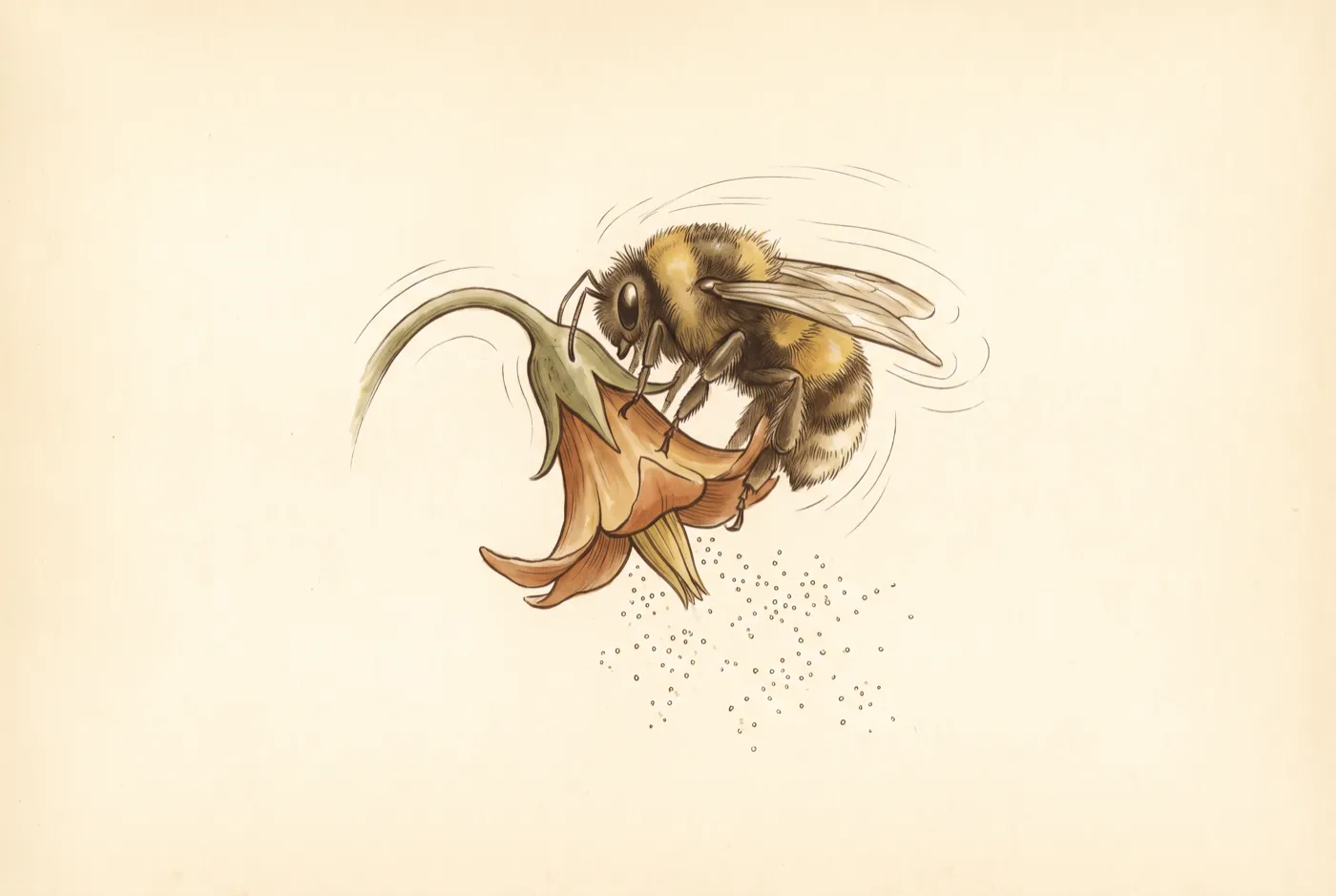
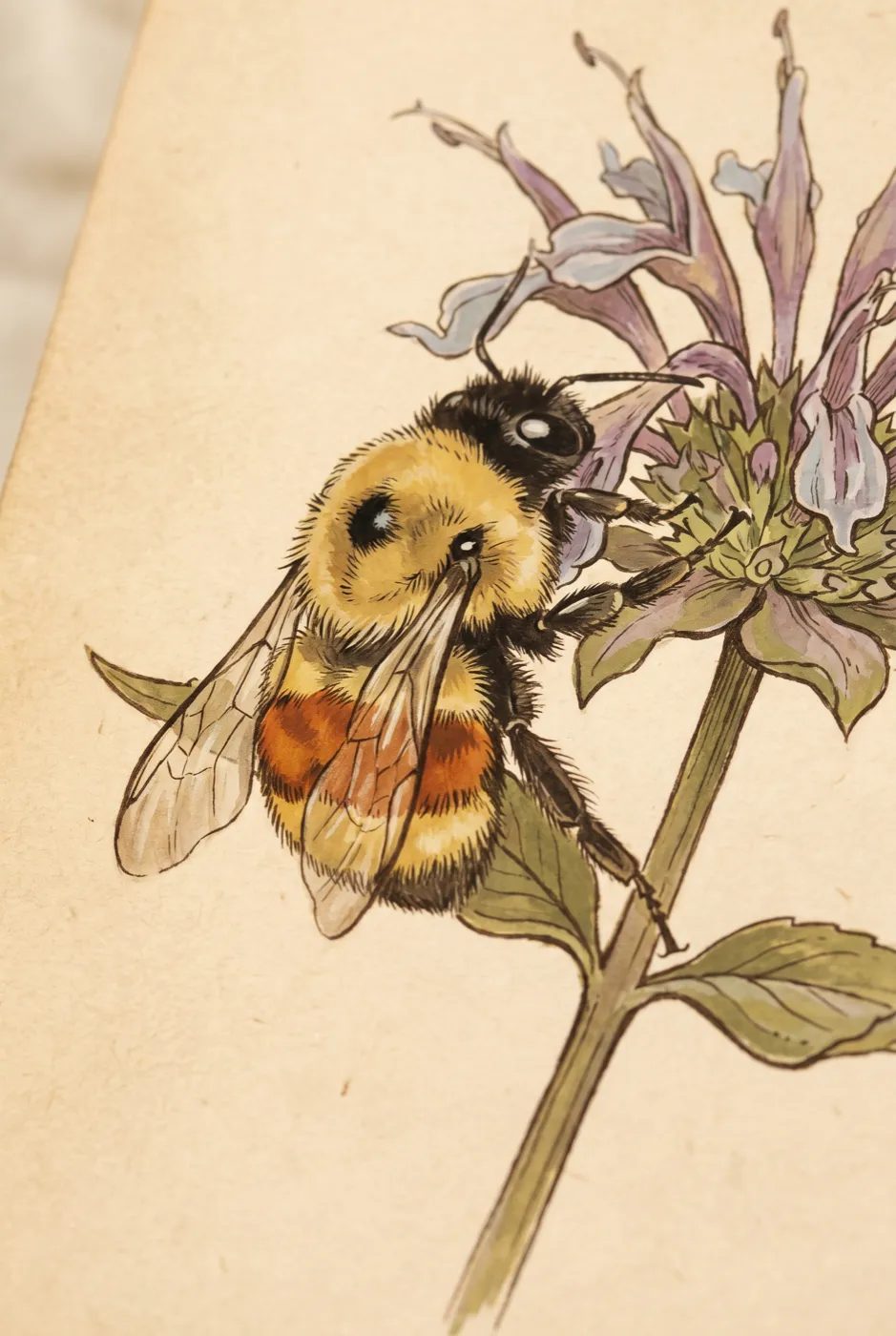
Nobody knows for certain why the rusty patched bumble bee declined. The US Fish and Wildlife Service, listing it as endangered in January 2017, wrote that the exact cause is uncertain and named four suspects: habitat loss and degradation, pathogens, pesticides, and the problems of small populations. The strongest lead is a fungal pathogen, Nosema bombi, which rose sharply in wild bumble bees in the 1990s alongside outbreaks in commercially reared colonies. The study that tested it most directly found the timing fits and the cause is still unproven.
That is an unsatisfying answer, and it is the accurate one. The collapse itself is not in doubt. What happened is well measured; why it happened is not.
A common bee, then a rare one
In its 2017 rule the Service called the bee historically "abundant and widespread," the fourth most common bumble bee in its relative abundance analysis. It had been recorded at 926 populations across the eastern United States, the upper Midwest and southern Ontario and Quebec. Since 1999 it had been seen at 103, an 88 per cent decline. Counted by county instead, the loss of range was 87 per cent.
Even the 103 is generous. A population, for the rule's purposes, was any place with at least one bee recorded since 1999, and 95 per cent of them rested on five individuals or fewer. That is a minimum count of the kind described in how scientists count animals they cannot see: a figure built from what was found, which says nothing about what was missed and little about what is still there. The rule itself notes that many of those places had not been reconfirmed since the early 2000s.
The Xerces Society dates the turn to the late 1990s, when biologists noticed the rusty patched and three related bumble bees, two in the West and one in the East, falling at the same time. Surveys since 2003 have found very few.
The pathogen hypothesis
The leading explanation came from the bumble bee researcher Robbin Thorp, and the Xerces Society sets it out. Between 1992 and 1994, queens of two North American bumble bees were shipped to European rearing facilities, where colonies were produced and sent back for greenhouse pollination. The idea was that the colonies picked up a virulent strain of Nosema bombi from a European species reared alongside them, and carried it into wild bees foraging near greenhouses and fields.
In 2016 a team led by Sydney Cameron at the University of Illinois tested this with museum drawers. They extracted Nosema DNA from 2,048 pinned bumble bees collected between 1979 and 2011. In the rusty patched bumble bee and two other declining species, infection was flat before a change point and then rose significantly. Across the declining species the rise came in the early to mid-1990s, the years of the outbreaks in commercial stock.
The second half of the result undercut the story it was testing. The authors found no conclusive genetic evidence that the strain came from Europe; the strain now common in declining American bees was already present in the United States before the commercial colony trade. And they were plain about the limit of their own data: confirming a direct causal link "will require further research." A pathogen can be more common in a declining species because it is killing it, or because something else has already weakened it.
The other suspects
The 2017 rule treats the pathogen evidence the same way. It notes how closely the timing matches, then notes that the pattern of losses cannot be completely explained by exposure to Nosema bombi, and calls the evidence for spillover as the main cause "debatable."
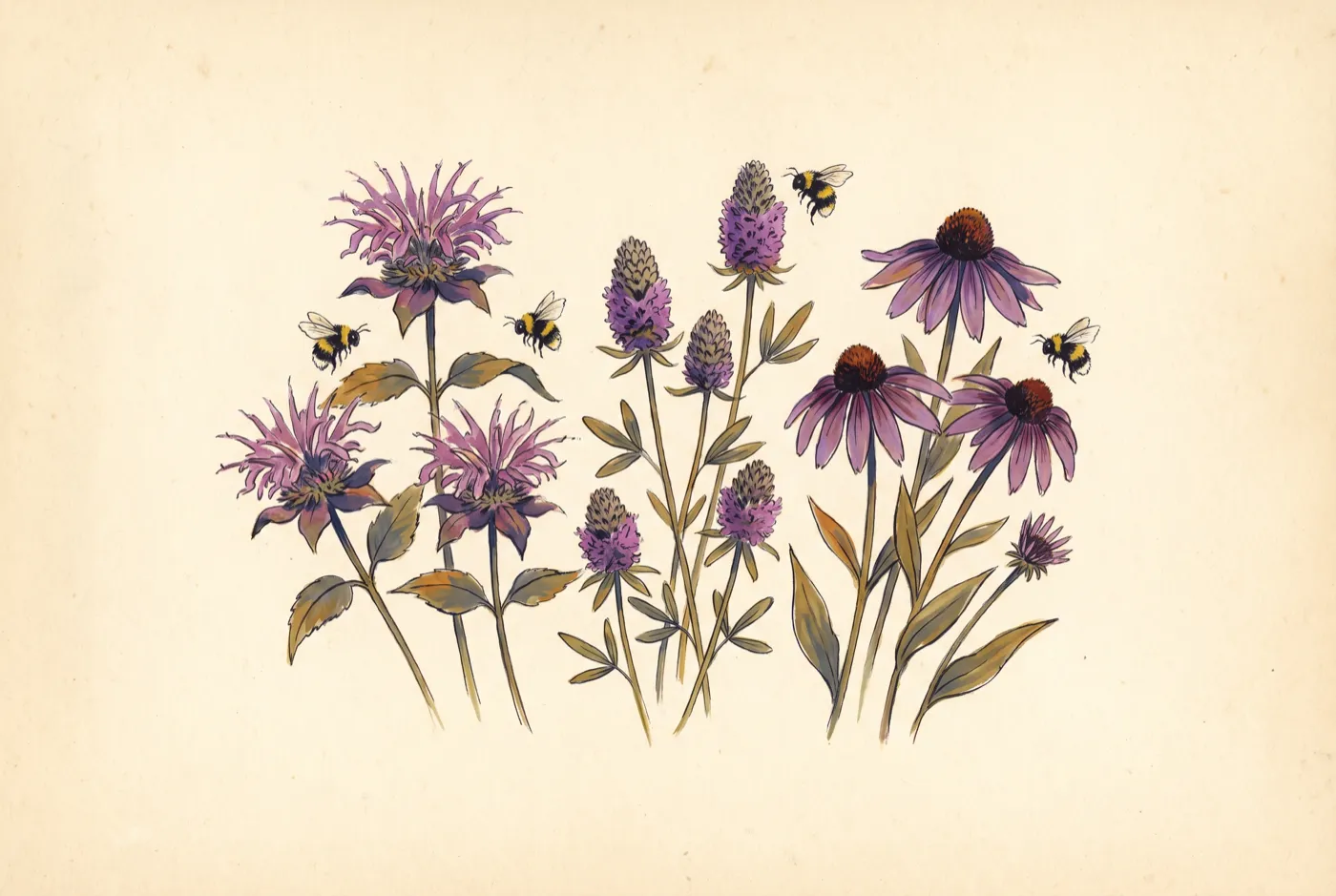
The other three suspects are harder to time and easier to believe. The bee's original grasslands in the Northeast and upper Midwest are largely gone or fragmented, and large monocultures cannot feed a colony through its long season. Insecticides, and neonicotinoids in particular, have documented lethal and sublethal effects on bumble bees, though the rule says their overall toxicity to this species is unknown. And once populations are small, bumble bee genetics works against them: when a queen mates with a related male, half of the offspring that should be females develop as males instead. The Cameron paper ends where most reviews of pollinator decline now end, with several stressors acting together, each making the others worse.
Where that leaves the work
An unsolved cause does not stop recovery work; it just spreads it out. In the listing rule the Service committed to population-specific assessments of the stressors acting on each population that remains. The habitat side of that work, and how far the law reaches onto it, is in the bee with a map and no fence. The archive record carries the Xerces Society's sources, and the Society's own profile of the species, which sets out the pathogen hypothesis and its threats in full, is the best single page to read next.
Sources
Read the same pages this note was written from. A citation is not a partnership or an endorsement.
- gpo.gov · https://www.gpo.gov/fdsys/pkg/FR-2017-01-11/html/2017-00195.htm
- life.illinois.edu · https://www.life.illinois.edu/scameron/publications/pdfs/CameronEtAl_Nosema_PNAS2016.pdf
- pmc.ncbi.nlm.nih.gov · https://pmc.ncbi.nlm.nih.gov/articles/PMC4843438
- xerces.org · https://www.xerces.org/endangered-species/species-profiles/at-risk-bumble-bees/rusty-patched-bumble-bee
The app
Reading is where it starts.
Witness brings one species a week to your phone: a drawn plate, its true story with sources, and one honest action. These notes are the reading between them.
More in Species
View all →