Yes, since 1 July 2026: about 1.53 million acres in 14 units across 33 counties in Illinois, Iowa, Minnesota, Virginia, West Virginia and Wisconsin, designated nine years after the bee was listed as endangered and only after a court set aside the Service's refusal to draw a map at all. Most of that land is private, and a critical habitat designation binds federal actions and nothing else, so on most of the map nothing changes unless a federal permit or federal money is involved. Ten weeks after the map took effect, the one rule that did reach private habitat, the definition of "harm", was rescinded.
That last sentence is the reason to read this bee's map closely. It is the most precisely drawn habitat of any insect in the United States, and it arrived in the same summer that the law behind it stopped reaching the ground it is drawn on.
What the bee needs, and when
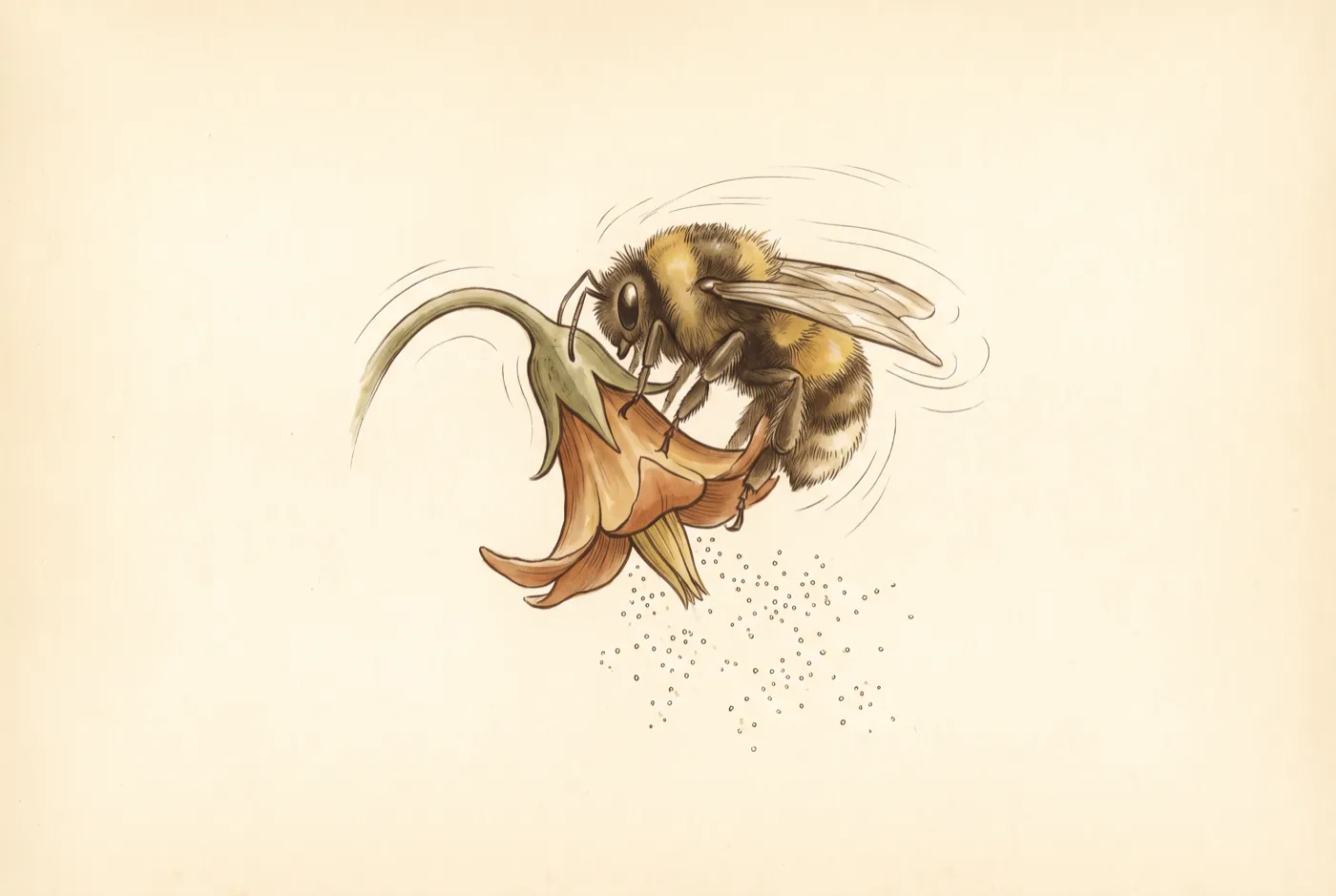
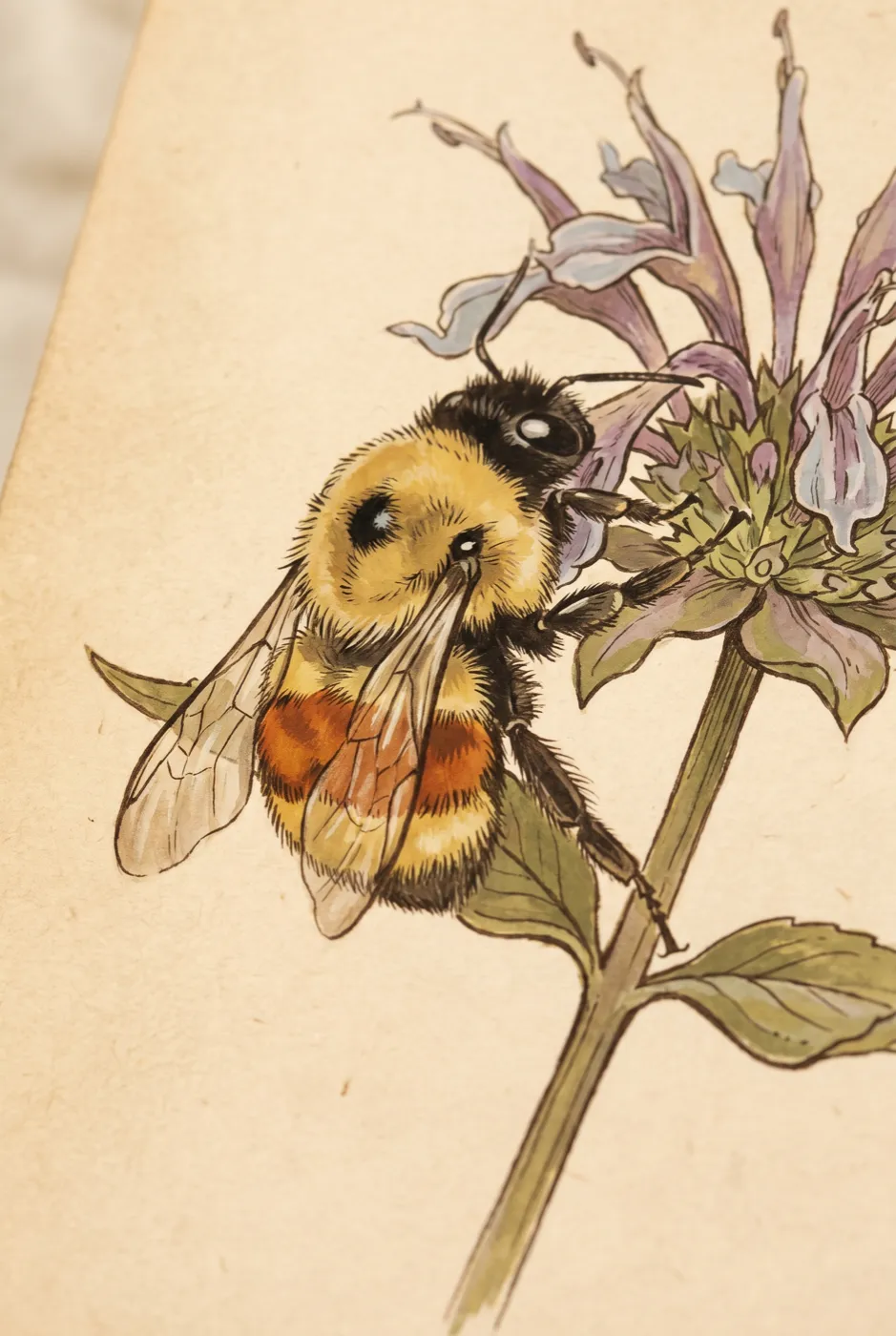
A rusty patched bumble bee colony lives one year, and it needs three different places to do it. In spring a single queen, alone, has to find an abandoned rodent burrow, typically one to four feet underground, and start a colony from nothing. Through the summer the colony cannot store much, so it needs flowers in bloom continuously from about April to October; a gap of a few weeks is a famine. In autumn the new queens mate and go to ground in loose, well-drained soil in upland forest or woodland, under leaf litter, to overwinter. Bloom, burrow, forest floor: a species that lives in three habitats a year and flies between them. The Service's own rule says the best of that ground is forest edge and meadow margin, where rodent nests and diverse flowers sit side by side.
It once ranged across the eastern United States and the upper Midwest. The Xerces Society puts the loss at 87 per cent of its historic range, and the International Union for Conservation of Nature lists it as Critically Endangered.
Why the Service said a map would not help
The listing came on 11 January 2017 and took effect on 21 March, the first bumble bee protected under the Act. Critical habitat is supposed to be designated at listing "to the maximum extent prudent and determinable," and on 1 September 2020 the Service published its answer: not prudent. A species this flexible about where it lives, the reasoning went, would not benefit from a map.
The Natural Resources Defense Council, the Center for Biological Diversity and Friends of Minnesota Scientific and Natural Areas sued in March 2021. On 11 August 2023 a federal court vacated the determination and sent it back. A settlement in February 2024 gave the Service until that November to propose something, and on 26 November 2024 it proposed 1,635,746 acres in 14 units. The ownership figures in that proposal are the ones to hold on to: approximately 83 per cent private, 9 per cent state or local, 8 per cent federal, and less than 1 per cent tribal.
What 1.5 million acres binds
The final rule, effective 1 July 2026, designates 1,534,951 acres. About 79,859 acres came out because they were already enrolled in a voluntary conservation agreement for the monarch. One unit alone, 520,854 acres around Minneapolis and St Paul, is 462,540 acres of private land.
What the designation does is specific. A federal agency that funds, permits or carries out an action inside the units must consult the Service and avoid destroying or adversely modifying the habitat. What it does not do, in the rule's own words: it "does not affect land ownership or establish a refuge, wilderness, reserve, preserve, or other conservation area," does not open private land to the government or the public, and requires no restoration by a private owner. On the 462,540 private acres of that one unit, a landowner who needs no federal permit is bound by nothing on the map.
The rule contains its own illustration of the limit. The proposal had named rodenticides among the pesticide uses that might need special management inside the units. The final rule removed the word, because rodenticide use "is almost exclusively outside the realm of section 7 of the Act," with no federal nexus, "which makes it highly unlikely that the need to consult would arise." The threat to the burrows is real; it simply sits where the map does not reach. Something similar happened with the condor and lead, where the fix came from a state ammunition law and not from the federal Act.
The word that used to reach a garden
Until this month there was a second route. Under section 9 of the Act it is unlawful to "take" a listed animal, and since 1975 the regulatory definition of "harm" had included habitat modification that actually kills or injures wildlife by impairing breeding, feeding or sheltering. That applied on any land, federal permit or not. It is how a mown-out August meadow inside a unit, with the colony's only bloom in it, could in principle be a violation.
The definition was rescinded by a final rule published on 14 July 2026, effective on 14 September, about ten weeks after the bee's map took effect. The Service now reads take as an act directed at a particular animal. Clearing the meadow to get at the bees would still qualify. Clearing it for any other reason would not. The map still stands, for federal actions. The rest of the ground has gone back to whoever owns it.
What a garden is, legally
Nothing. And it is exactly the habitat the rule describes: flowers from spring to autumn, undisturbed ground, leaves left where they fall so that a queen has somewhere to spend the winter. The record's act has not changed and does not need to. Native flowers that bloom April through October, no pesticides, the leaves left lying, and a photograph of any bumble bee you meet uploaded to Bumble Bee Watch, where an expert verifies it and adds it to the map of what survives where.
The Service's rule calls critical habitat "just one tool" in a species' recovery, and for this bee that is exactly true. The map ends at the property line. The bloom does not have to.
Sources
Read the same pages this note was written from. A citation is not a partnership or an endorsement.
- govinfo.gov · https://www.govinfo.gov/content/pkg/FR-2026-06-01/pdf/2026-10846.pdf
- govinfo.gov · https://www.govinfo.gov/link/fr/89/93245
- fws.gov · https://www.fws.gov/press-release/2026-05/finalized-habitat-protections-endangered-rusty-patched-bumble-bee
- fws.gov · https://www.fws.gov/species/rusty-patched-bumble-bee-bombus-affinis
- regulatorystudies.columbian.gwu.edu · https://regulatorystudies.columbian.gwu.edu/designation-critical-habitat-rusty-patched-bumble-bee
- xerces.org · https://www.xerces.org/endangered-species/species-profiles/at-risk-bumble-bees/rusty-patched-bumble-bee
- xerces.org · https://xerces.org/blog/rusty-patched-bumble-bee-first-bee-in-continental-us-to-be-protected-under-endangered-species
- xerces.org · https://xerces.org/bumble-bees/nesting-overwintering
- govinfo.gov · https://www.govinfo.gov/content/pkg/FR-2026-07-14/pdf/2026-14195.pdf
- fws.gov · https://www.fws.gov/project/endangered-species-act-regulation-revisions
- bumblebeewatch.org · https://www.bumblebeewatch.org/
Free to read
Reading is where it starts.
Witness keeps one species a week: a drawn plate, its true story with sources, and one honest action. The archive is open to read, and these notes are the reading around it.
More in Species
View all →