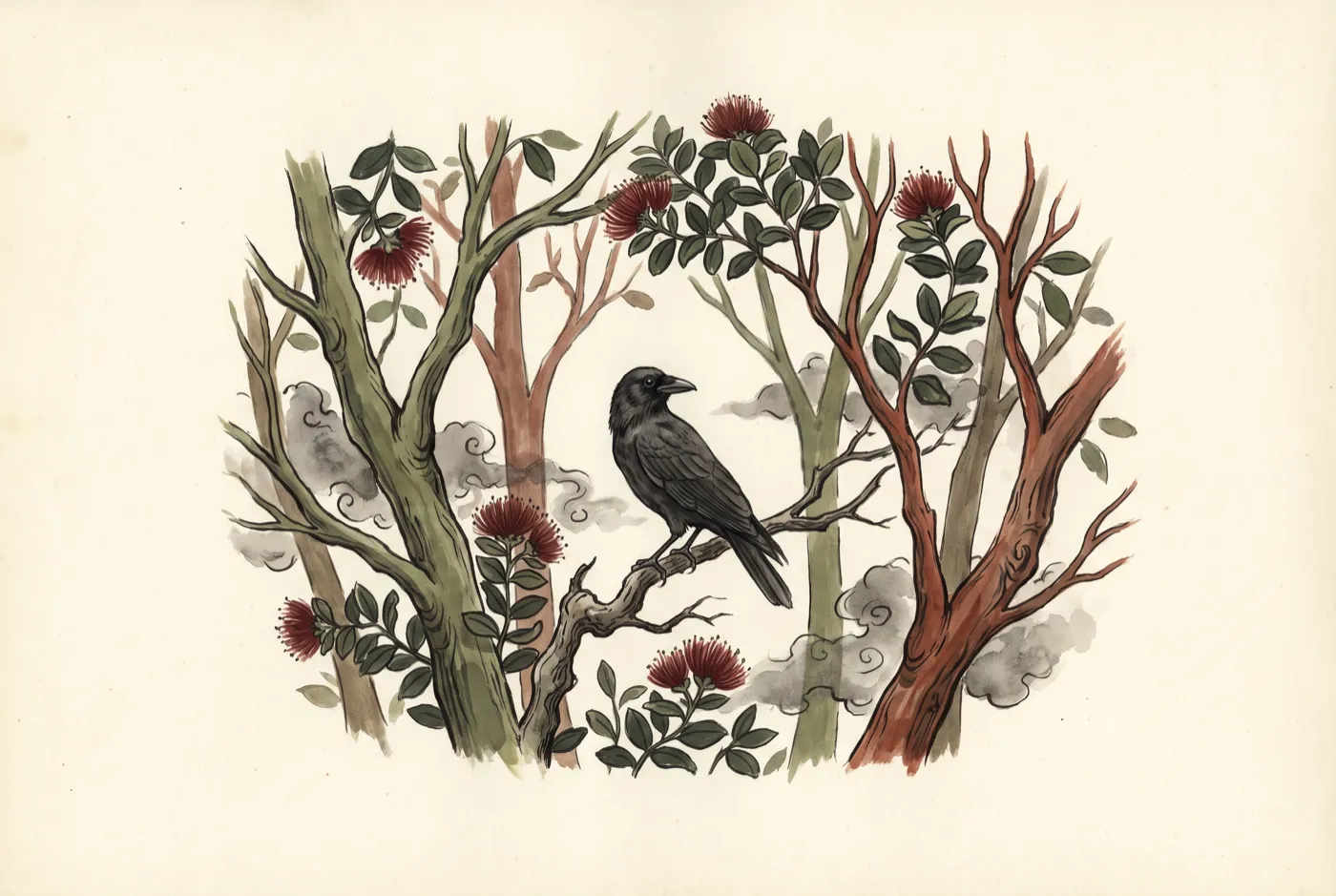
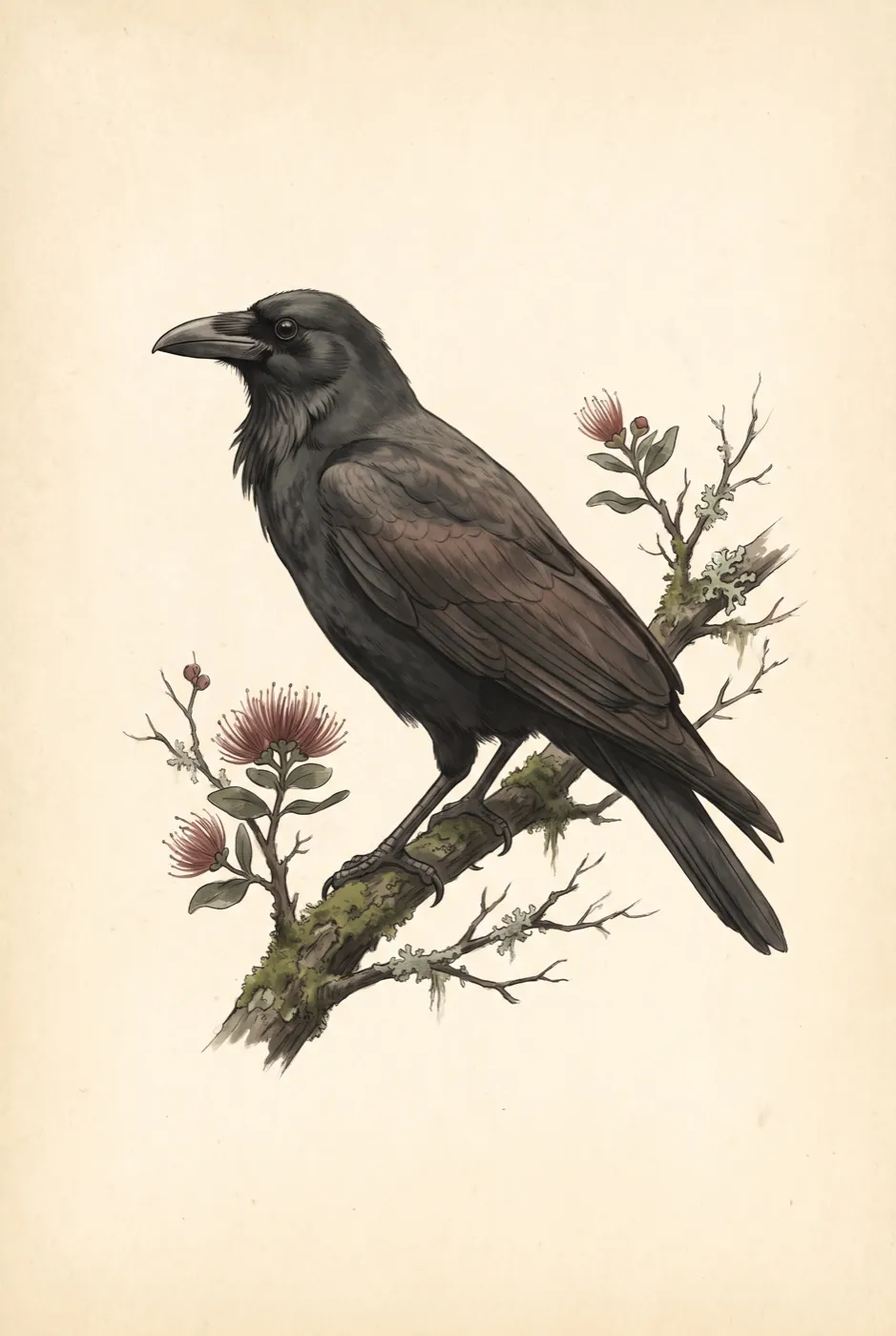
Yes. In a 2016 study in Nature, 78% of the 104 ʻalalā (Hawaiian crows) tested in captivity spontaneously used sticks to probe for out-of-reach food, and young birds raised without tool-using adults worked it out on their own. That makes the ʻalalā one of very few bird species with a known capacity for foraging tools. It is also a capacity nobody has ever documented in the wild: the species had already disappeared from the forest by the early 2000s, and the birds that carry the skill were all born in human care.
What the 2016 study found
The team, led by Christian Rutz of the University of St Andrews with staff of the San Diego Zoo's conservation programme, tested 104 of the 109 ʻalalā alive at the time. Five were left out for health reasons. The apparatus was a wooden log with six extraction tasks, baited with food in crevices and holes.
Most of the tool users did it in their first trial, often within minutes. Age mattered: 93% of sexually mature birds, those in their third year or older, used tools, against 47% of younger ones. Among the 64 tool users tested alone, 67% shortened a stick to suit the task, and tools made from plant material were seen in 14%. Males and females were about equally likely to use tools.
Nobody showed them
The harder question was whether the birds had learned it from each other. The researchers reared seven young ʻalalā in two groups, with no chance to watch a tool-using adult. All seven eventually tried sticks and other objects on hidden food. Four succeeded, and a fifth later succeeded on the log task. The authors also traced contacts among the captive birds from 1996 to 2013 and concluded that a single inventor passing the trick on was an unlikely explanation for how widespread it was. Their reading is that the birds most likely have a built-in tendency to explore objects and then discover the solution themselves.
The ʻalalā and the New Caledonian crow, the famous tool-maker of the corvid family, are only distantly related. The authors take that as evidence the skill arose twice, on remote tropical islands where there is little competition for grubs hidden in wood and few predators.
What the study could not say
The paper is careful about its own limit. Apart from one suggestive record of a bird carrying a twig, the authors "found no reports of tool-related behaviour in the wild." Wild ʻalalā did chip bark and chisel wood in search of prey, but a stick left in a forest rots. They raise a second possibility: the last wild birds, in a degraded island forest, may no longer have used tools at all. "We may never know," they write, "whether birds once used tools under natural conditions."
So the finding is real and narrow. A species can keep a behaviour in an aviary after the place where it evolved is gone, and the behaviour can be perfectly intact without anyone being able to say what it was for.
The forest the birds are in now
That matters because the ʻalalā are back in a forest. In November 2024 five young birds were released in East Maui, and by November 2025 the Hawaiʻi Department of Land and Natural Resources said they had been there more than a year. The department's report does not mention tool use, and this note makes no claim that they use it. What it does report is feeder stations that stay "until the ʻalalā become fully self-sufficient foragers," alongside a natural diet that includes maile, ʻōlapa and pūkiawe. How the release is defined, and why a flock that flies free still counts as managed, is in the note on Extinct in the Wild.
The question the 2016 study leaves for the release team is practical: what a crow does with a stick when it has to feed itself. The loss that comes before that, the knowledge a population holds and a captive flock may not, is the subject of the note on what extinction takes with it. The record for the ʻalalā links the recovery project's own pages, which are where to follow the Maui birds.
Sources
Read the same pages this note was written from. A citation is not a partnership or an endorsement.
The app
Reading is where it starts.
Witness brings one species a week to your phone: a drawn plate, its true story with sources, and one honest action. These notes are the reading between them.
More in Species
View all →