Scientists count animals they cannot see by detecting something the animal leaves behind or gives off: its sound, its photograph, its droppings or its DNA. They then work out how many distinct individuals those traces represent, and report the answer as a range, a minimum or a model estimate with a stated confidence. The figure is never a headcount. It is a measurement with a method and a date attached, which is why two honest organisations can publish different numbers for the same species.
Listen: the vaquita
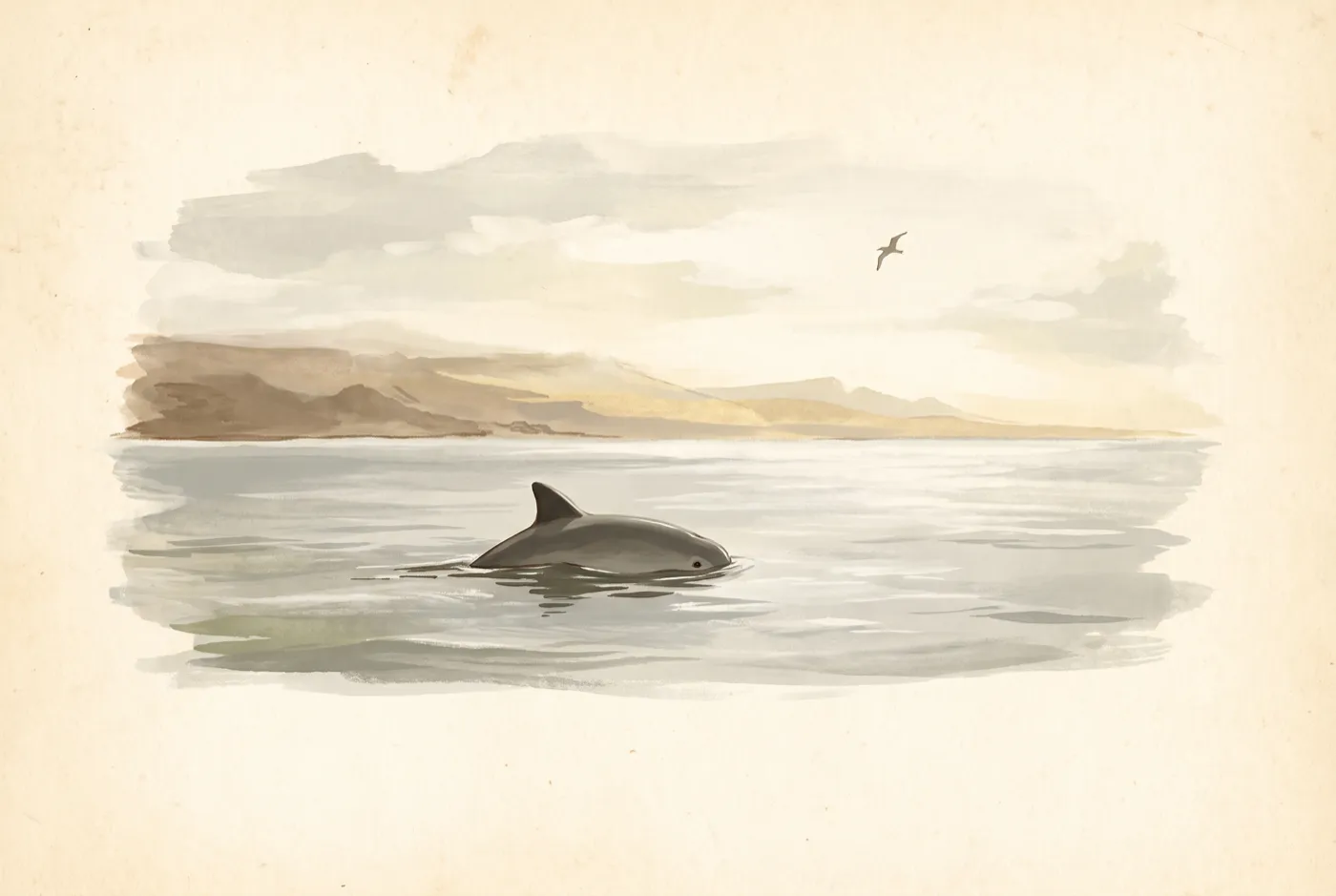
The vaquita is a porpoise of the northern Gulf of California, and finding one takes more than eyes. In 2025 the survey team moored acoustic detectors from May 24 to September 29 and logged 254 acoustic encounters, using 1,228 detectors at 497 sites. Two ships then searched for animals from September 2 to 30, each carrying three pairs of 25x binoculars.
Sound tells the observers where to look. It does not give the count. The count came from a group of observers who agreed, with facilitators, on how many distinct individuals they believed they had seen: seven to ten, with 67 percent probability. The 2024 range was six to eight at 75 percent, and the 2023 range was eight to twelve at 67 percent. Read plainly, the 2025 figure says that about one time in three the true number of animals observed falls outside seven to ten. The longer account is in how many vaquita are left, and the archive record keeps the species itself.
Photograph: the right whale
Each North Atlantic right whale can be recognised by its callosity pattern. Aerial and ship-based surveys photograph them, and the North Atlantic Right Whale Consortium keeps the photo-identification catalog, which is maintained by the New England Aquarium. Because every animal can be told apart, scientists can follow individuals across years instead of guessing.
That is the strongest case for counting by recognition, and it still produces a model output. In October 2025, NOAA Fisheries estimated that 384 right whales (plus 10, minus 9) were alive at the start of 2024. Its page also notes that only about one-third of right whale deaths are detected, so what the catalog does not see still has to be modelled. The archive record carries the rest.
Sample: the mountain gorilla
For gorillas that are not used to people, field teams collect dung. For the 2018 survey of Bwindi Impenetrable National Park in Uganda and the neighbouring Sarambwe reserve in the Democratic Republic of the Congo, nearly 2,000 georeferenced samples went to the University of California, Davis. The laboratory extracted DNA, genotyped it to identify individual gorillas, and combined genetic and location data to assign each sample to a group.
The result was reported as a "minimum count of 459", against an estimate of 400 in 2011. Adding the 604 counted in the Virunga Massif in 2015 and 2016 gives the 1,063 usually quoted for the whole species. The word minimum is the survey's own, and it is doing work: the figure is a floor. The lead scientist also said the method revealed gorillas that are not habituated to people, and that they make up more than half of the population. See the mountain gorilla record.
Trigger a camera: the snow leopard
Camera traps record an animal when it walks past. A study in northern Pakistan ran cameras from 2010 to 2019 across four mountain ranges, covering about 39 percent of the species' range: 828 cameras, 26,540 trap days, and 53 unique individuals. The majority were detected only once. A spatial capture-recapture model, which uses repeat sightings to estimate how many animals were never photographed, put the population of Pakistan at 155, with a 95 percent confidence interval of 100 to 239.
That interval is the honest part. The authors recommend complementary methods such as non-invasive genetic sampling to validate and refine the figures. The archive record for the snow leopard carries the species; this note carries only how its number is made.
Sample the water: a different question
The United States Geological Survey describes environmental DNA, genetic material shed by animals into water or soil, as a non-invasive way to monitor rare, threatened or endangered species, suited to questions such as defining a species' extant range and screening sites for reintroduction. That is a question about where an animal is, which is a different question from how many.
Reading a number
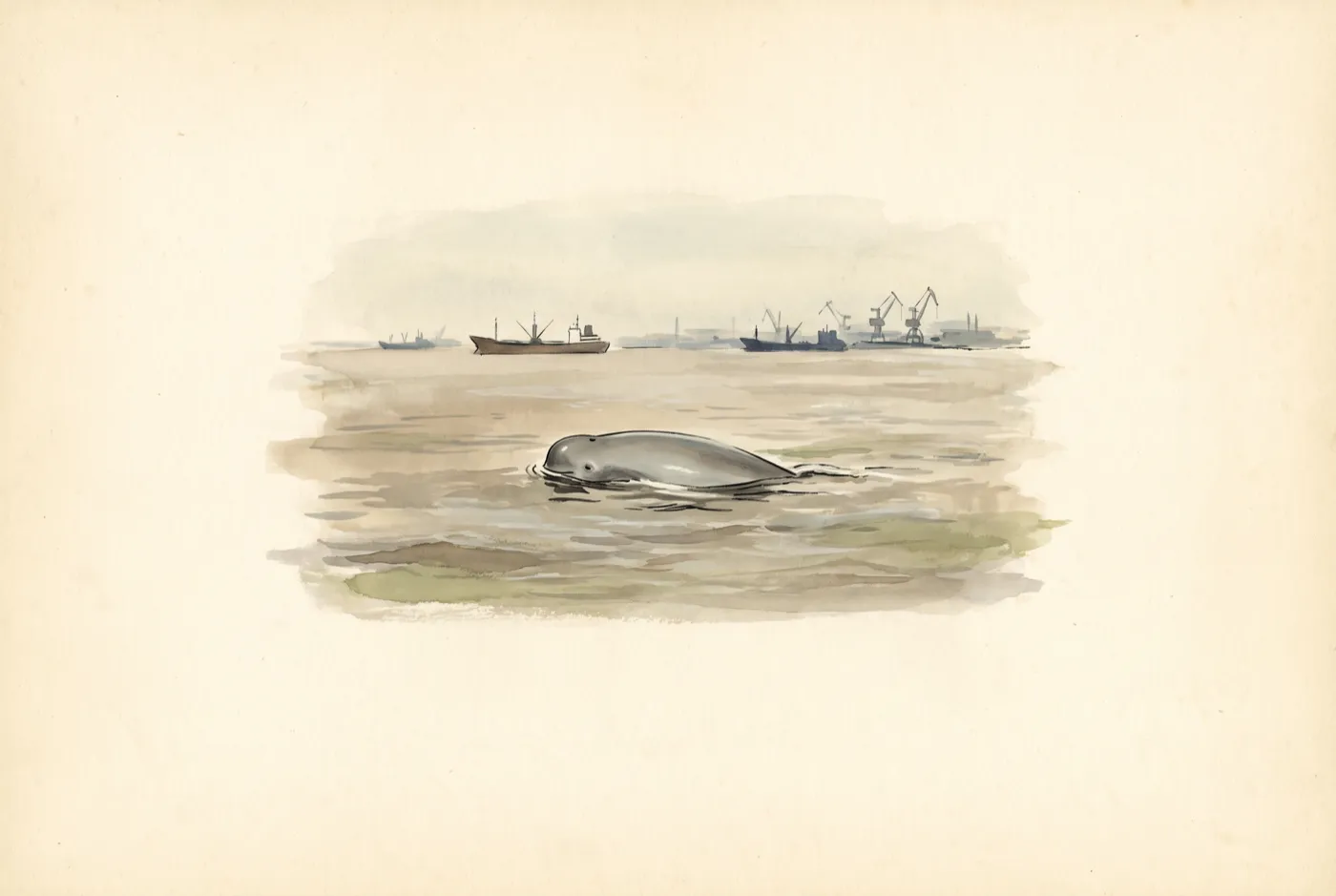
Four habits follow from this. Look for the date the measurement was made, not the date of the article. Look for whether the figure is a range, a minimum or a model estimate. Look for what the method could not see. And notice what a figure is answering: a conservation category such as the Red List grades risk and not abundance, and a river survey such as the one behind the Yangtze porpoise is a count made with its own limits.
The people doing this work are the observers on the ships, the field teams who walk for dung samples, the laboratory in California, and the researchers in Pakistan who published an interval that admits how much they do not know. Their reports are the best next thing to read.
Sources
Read the same pages this note was written from. A citation is not a partnership or an endorsement.
- seashepherd.org · https://seashepherd.org/2025/10/28/results-of-the-2025-vaquita-monitoring-effort/
- fisheries.noaa.gov · https://www.fisheries.noaa.gov/species/north-atlantic-right-whale
- mecu.ucdavis.edu · https://mecu.ucdavis.edu/2019/12/16/mountain-gorilla-census-results-announced/
- datadryad.org · https://datadryad.org/dataset/doi:10.5061/dryad.2rbnzs82x
- usgs.gov · https://www.usgs.gov/science/threatened-endangered-or-rare-species-detection
Records mentioned
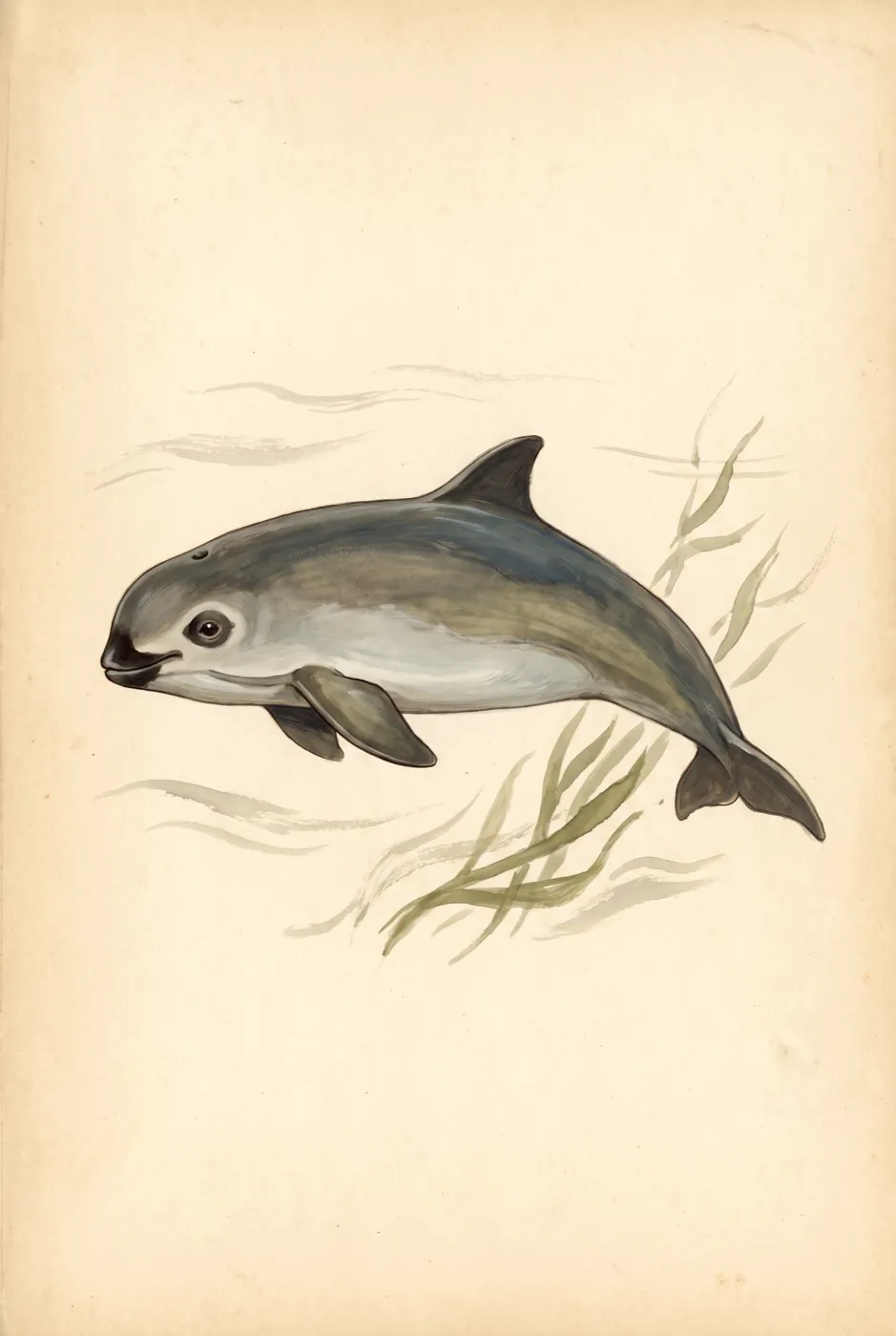 VaquitaEndangered · Northern Gulf of California, MexicoFull record on witnessatlas.com ↗
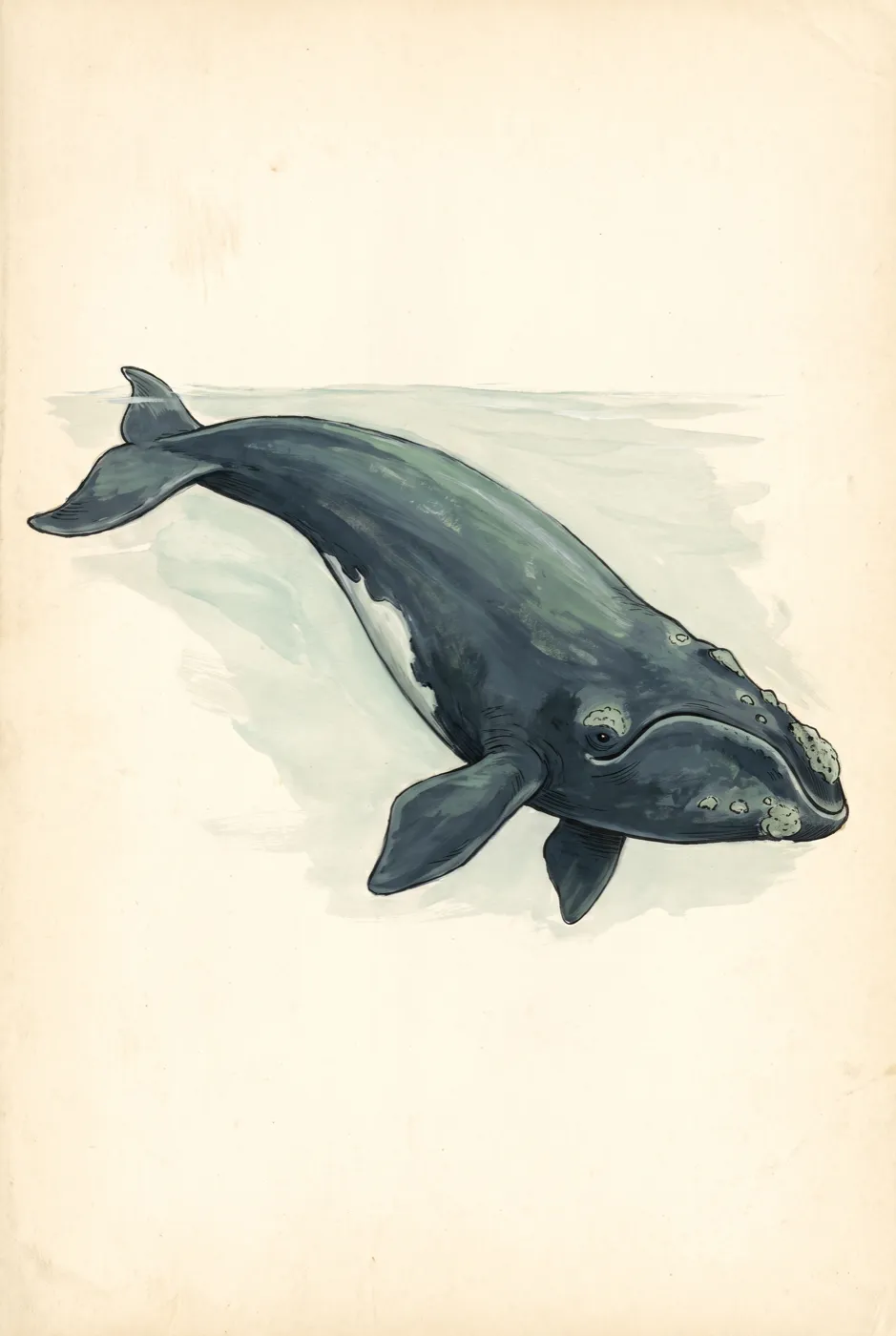 North Atlantic Right WhaleEndangered · Western North Atlantic, Florida to CanadaFull record on witnessatlas.com ↗
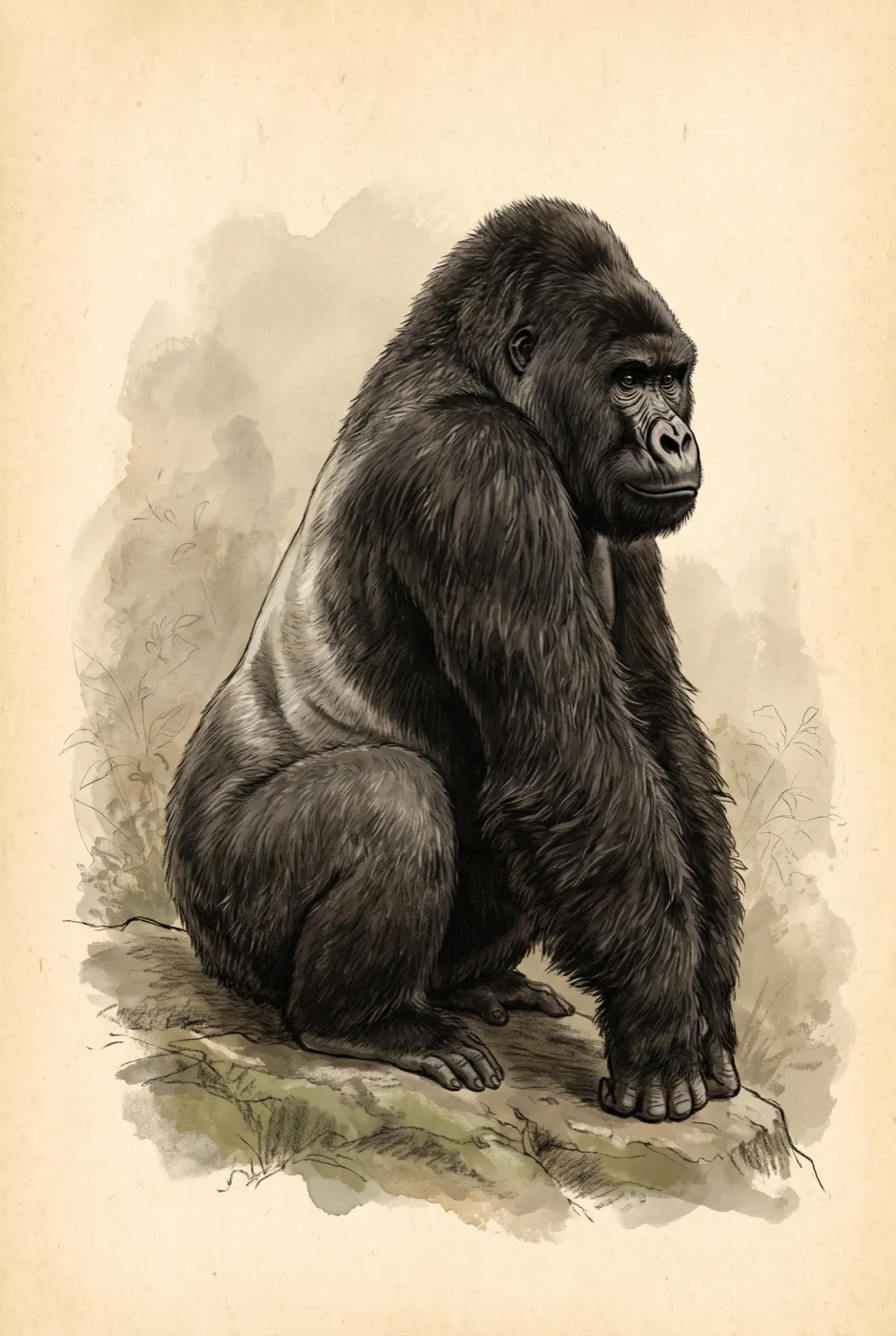 Mountain GorillaEndangered · Virunga Massif and Bwindi, East-Central AfricaFull record on witnessatlas.com ↗
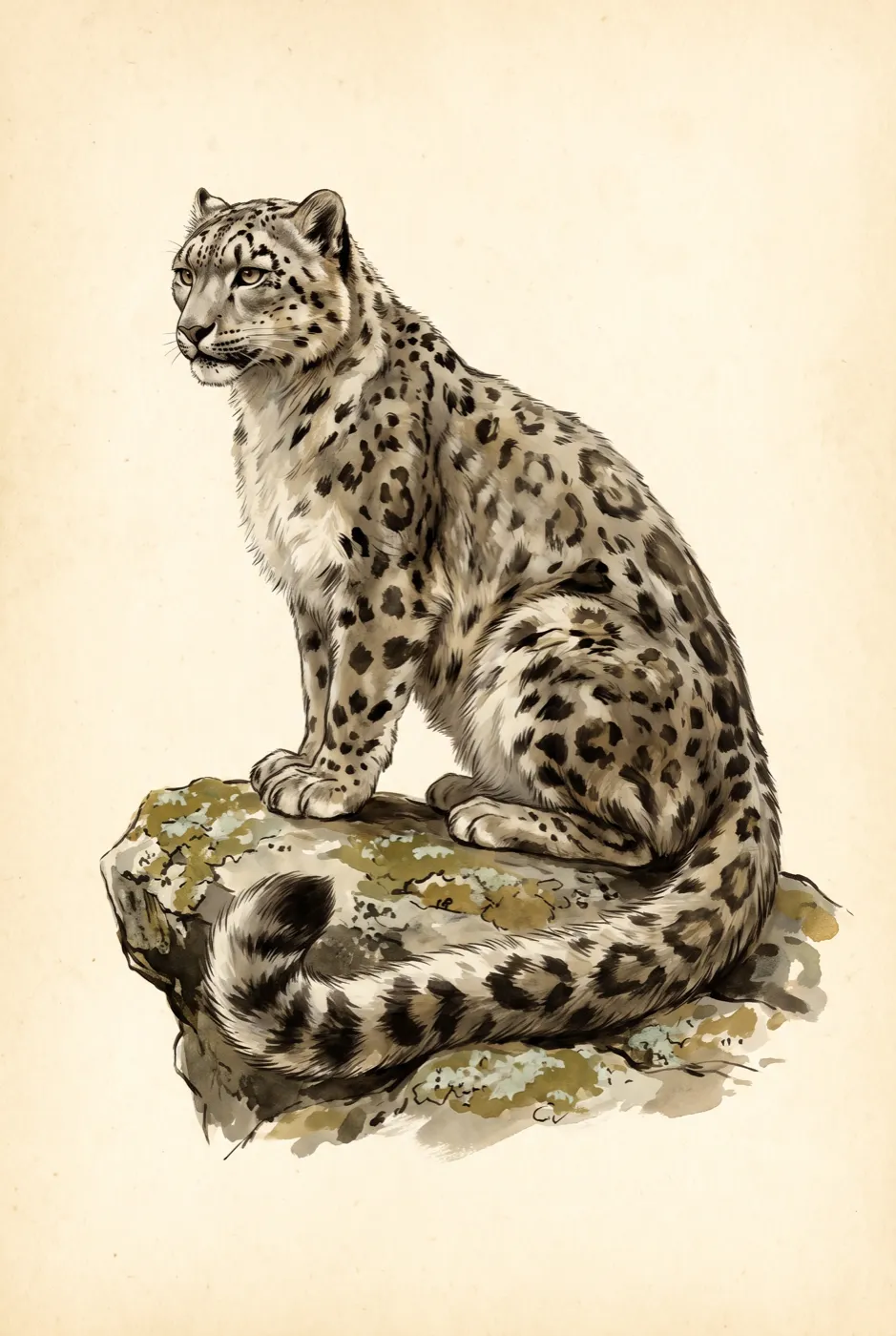 Snow LeopardVulnerable · High mountains of Central and South AsiaFull record on witnessatlas.com ↗
The app
Reading is where it starts.
Witness brings one species a week to your phone: a drawn plate, its true story with sources, and one honest action. These notes are the reading between them.
More in Numbers
View all →