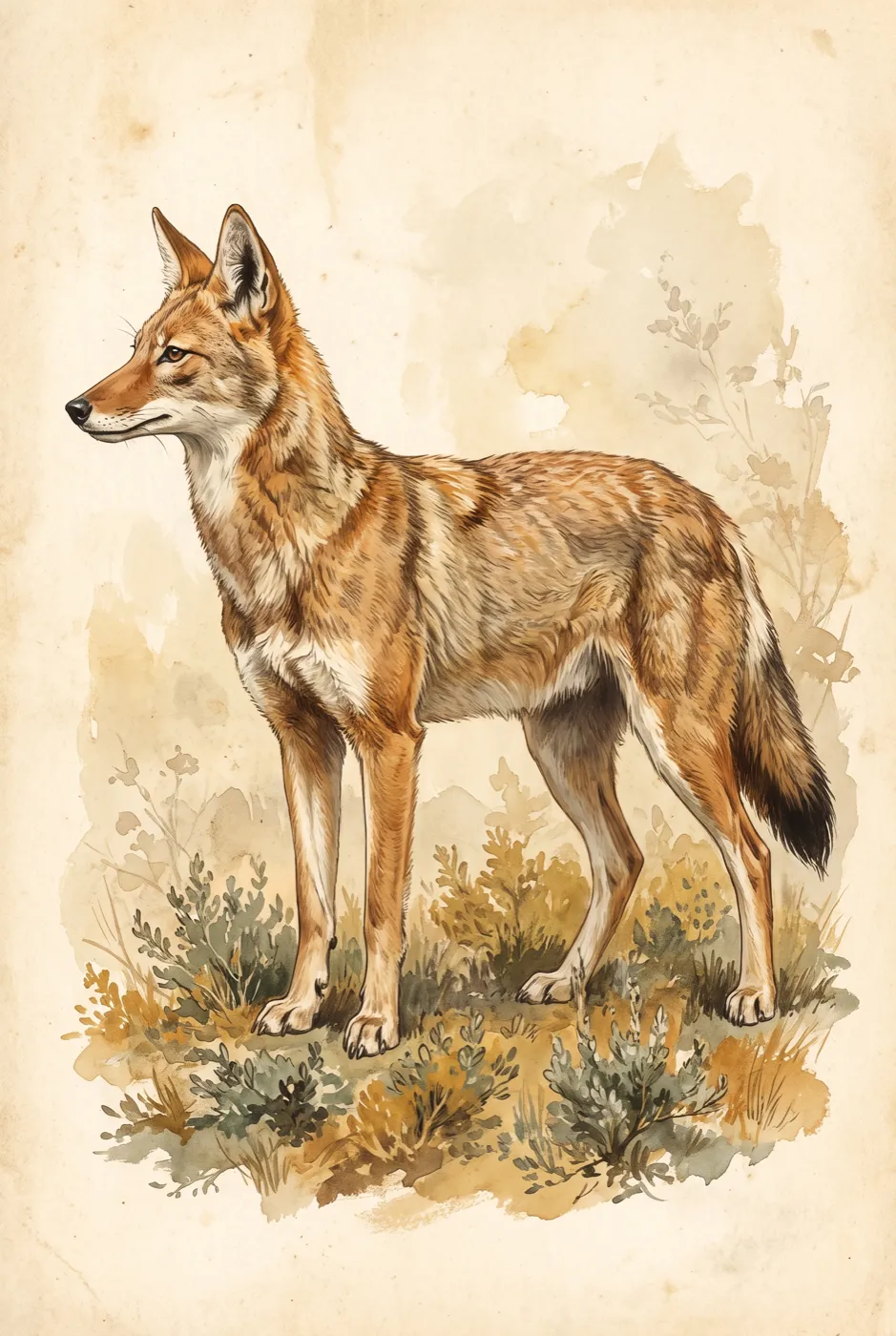
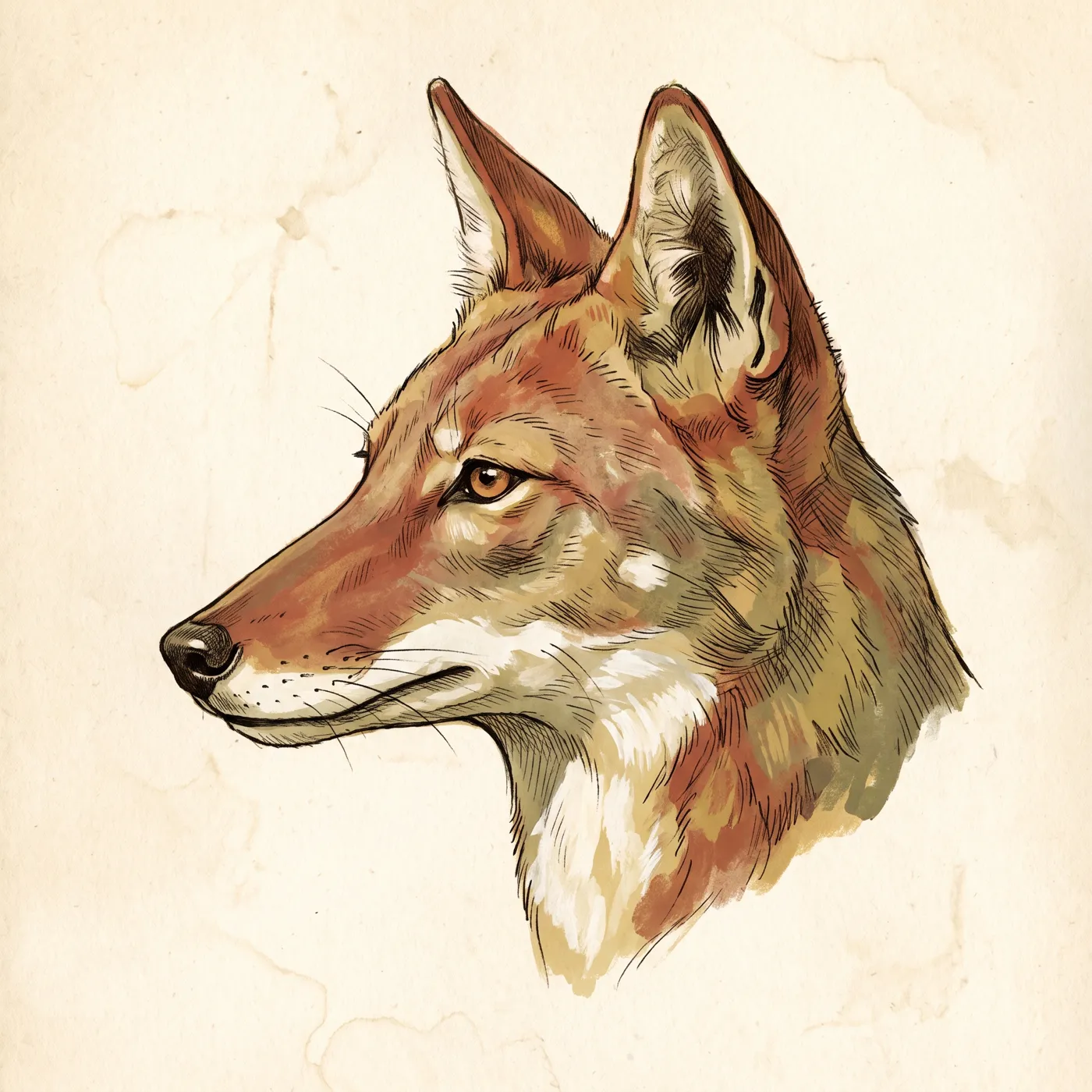
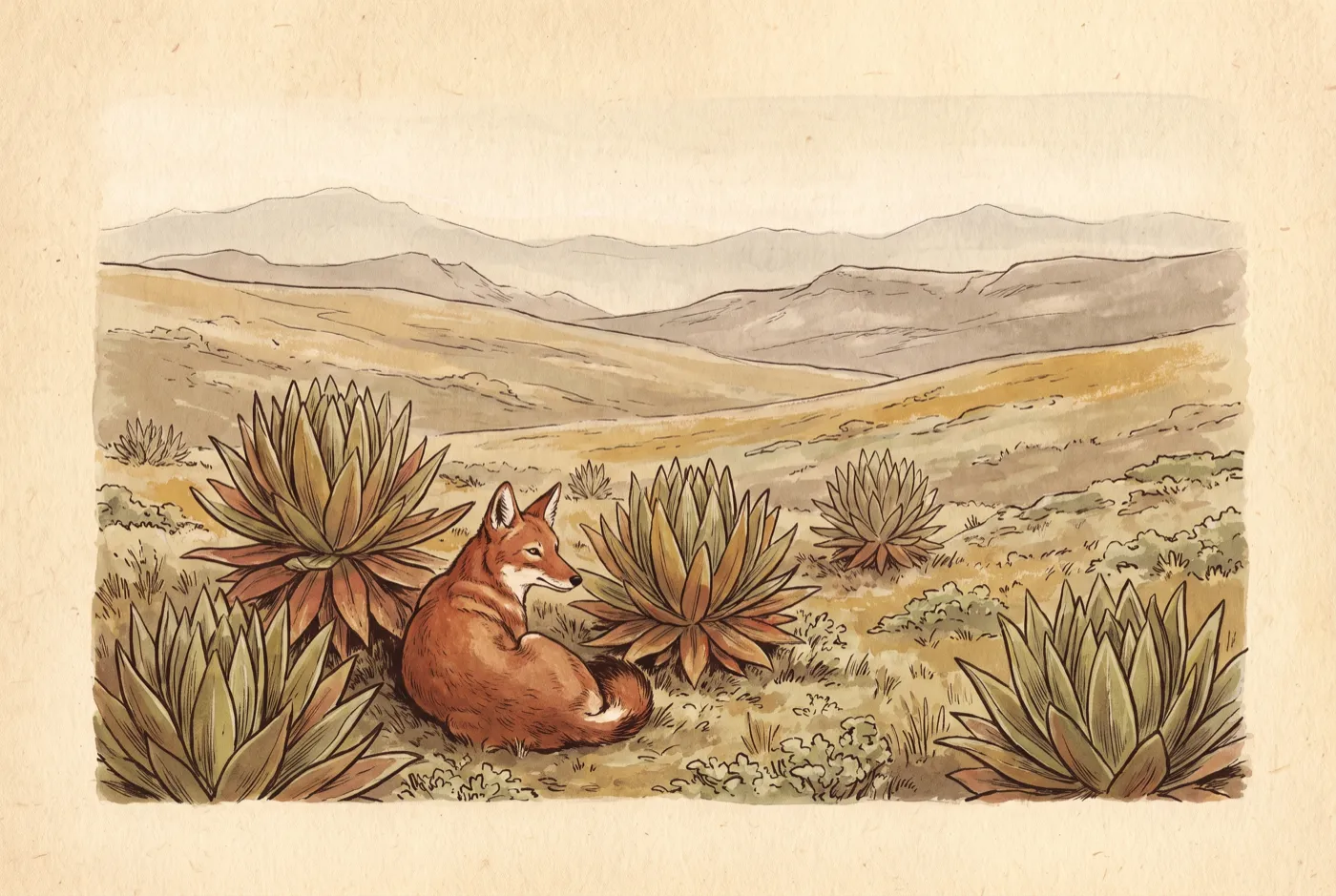
In 2019 rabies and distemper reached the Bale Mountains together and the outbreak ran past 220 days. What that changed about how the wolves are vaccinated.
Between March and November 2019, rabies and canine distemper moved through the Ethiopian wolves of the Bale Mountains at the same time. Writing in Emerging Infectious Diseases in December 2024, Marino and colleagues recorded an event that touched at least 19 packs across four subpopulations and lasted more than 220 days. Single-pathogen outbreaks in these wolves had run about three months. This one did not behave like the emergencies the programme had been built to answer, and the response to it is the reason the vaccination strategy looks different now.
What the survey teams found
Field teams recovered 57 carcasses and watched another five animals showing advanced clinical signs. Of the animals tested, seven were positive for rabies virus and 13 for canine distemper; one carried both. In the two areas under close enough monitoring to measure a before and after, the Sanetti Plateau lost about 60 per cent of its wolves, with 17 unaccounted for, and the Web Valley about 53 per cent, with 47 unaccounted for.
Those are not projections. They are the difference between a known population and the animals still there when the teams went back, which is the only kind of mortality figure a small, individually-known population can produce, and the reason so much of this work is monitoring rather than intervention.
The vaccine had to be tried on wild wolves first
An oral rabies vaccine was not a given. A bait can be refused, a sachet can go unpierced, and none of that is visible from a distance. So the University of Oxford, the Ethiopian Wildlife Conservation Authority and the UK Animal and Plant Health Agency ran a field trial of the SAG2 vaccine in three wolf packs and published the result in Vaccine in 2016.
The arithmetic is worth reading at full precision. Of 21 wolves trapped after the bait was laid, 14 carried the biomarker showing they had taken it. Of those 14, 86 per cent reached antibody levels considered sufficient to protect wildlife, and half cleared the higher threshold recognised universally. Count from the 21 rather than the 14 and a little over half of the wolves trapped carried antibody levels in the protective range. All but one of the vaccinated animals were alive fourteen months later.
"We now have a safe vaccine, a suitable bait, an efficient delivery method, and trained monitoring teams in place," said Claudio Sillero-Zubiri, who began the long-term study of these wolves in 1987. His colleague Fekede Regassa put the stakes in the same release: four major rabies outbreaks, he said, had each crashed the Bale Mountains population, "typically killing 50-75% of the subpopulation affected."
Reacting, then preventing
For years vaccination was reactive — an outbreak was detected and the packs around it were treated. Oral vaccination campaigns ran in 2018 and 2019, and the 2019 event arrived anyway, with a second pathogen alongside the one the vaccine addressed. The authors of the Emerging Infectious Diseases paper drew the obvious conclusion and stated it plainly: vaccines covering both rabies and distemper "should be favored when possible, in light of the possibility of concurrent outbreaks."
The campaign has since shifted toward vaccinating before anything is burning. In 2025, according to the Wildlife Conservation Network, which funds the work, more than 40 wolves were vaccinated across 14 packs against both diseases. That is close to a tenth of every Ethiopian wolf alive. It is a real number and a modest one, and both halves of that sentence matter.
Who is actually doing this
The Ethiopian Wolf Conservation Programme was founded in 1995 and runs as a WildCRU endeavour in partnership with Dinkenesh Ethiopia, the Ethiopian Wildlife Conservation Authority and regional governments, with Girma Eshete as field director. Since 1996 it has also vaccinated the domestic dogs in the settlements around wolf country — more than 3,000 a year — on the reasoning that a disease with a reservoir is not solved inside the species you are trying to save.
The animal at the end of all this is rare enough to count individually. Fewer than 500 adults survive across six isolated populations, and the Wildlife Conservation Network gave the figure as 454 as of this writing. The species was listed as Critically Endangered in 1994 after a crash, and down-listed to Endangered in 2004 when the numbers came back.
The programme publishes its own monitoring and its own papers, and the 2024 outbreak paper is open to read. The record we keep for the species links where that reading starts.
Sources
Read the same pages this note was written from. A citation is not a partnership or an endorsement.
Witness keeps one species a week: a drawn plate, its true story with sources, and one honest action. The archive is open to read, and these notes are the reading around it.