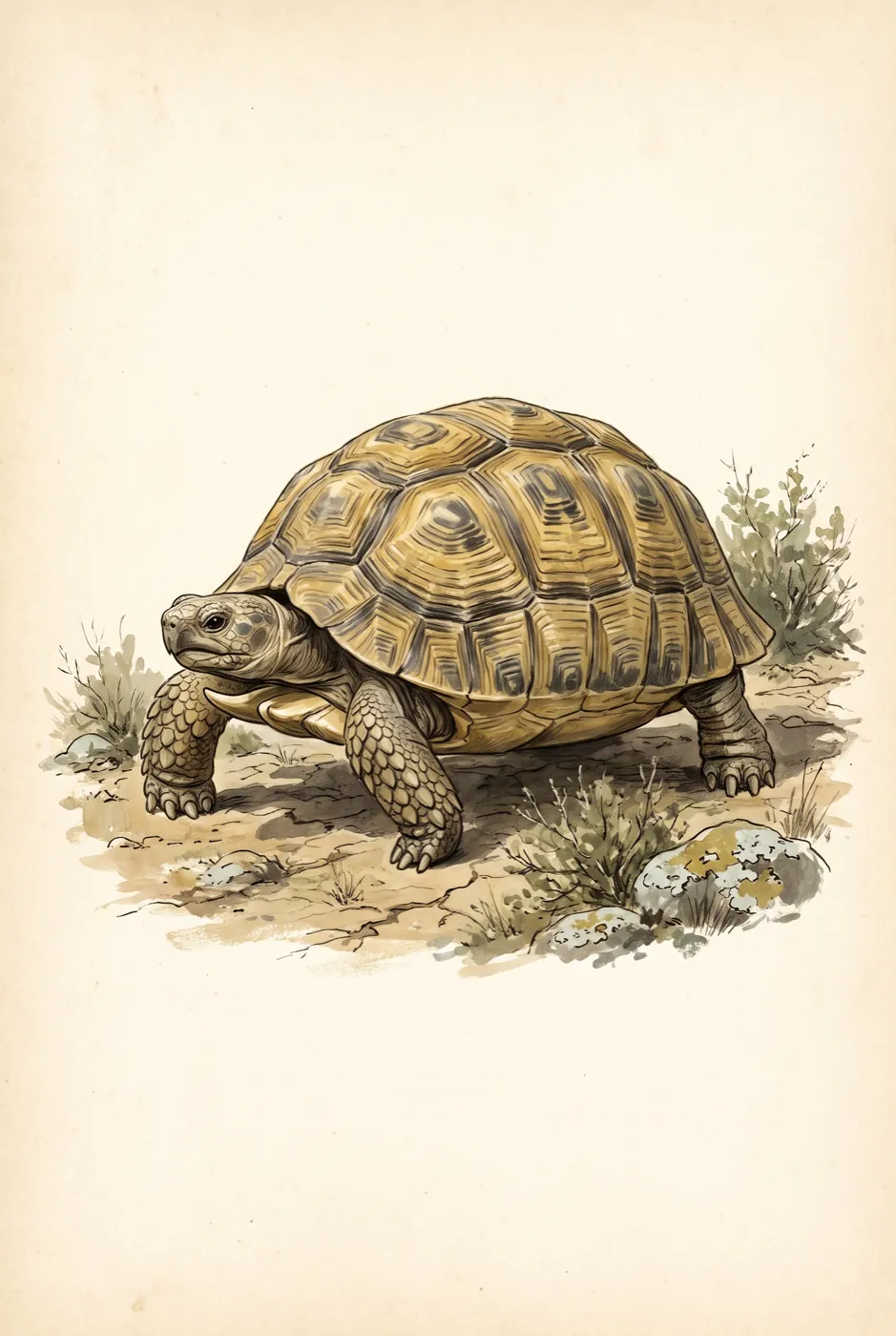
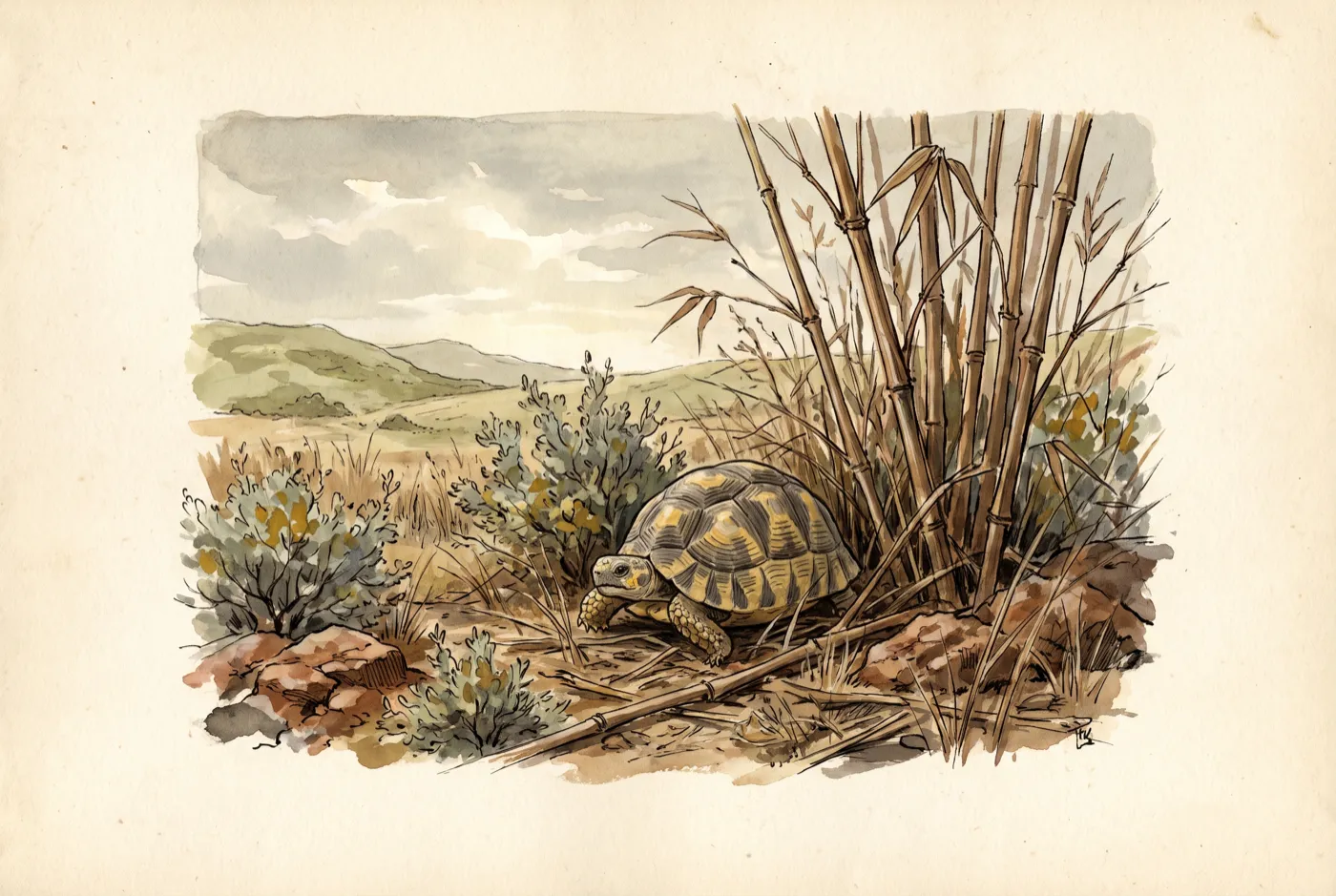
Ploughshare tortoises in northwestern Madagascar carry serial numbers cut into their shells. Staff at Baly Bay National Park put them there on purpose, and the Durrell Wildlife Conservation Trust and the Turtle Conservancy both list the engraving among the measures protecting the species. The reasoning is that a collector pays for an unblemished shell, so a permanent mark should destroy the price. It is the rare conservation intervention that looks, to anyone who does not know why, exactly like vandalism. It did not stop the trade.
The problem the mark was built for
Most of the species on any endangered list are there because something took their habitat. The ploughshare is not one of those. Durrell names illegal collection for the pet trade as the leading cause of its decline, and the shell that draws buyers is the same shell the animal cannot put down. Where demand rather than land use is doing the killing, protecting habitat does not touch the mechanism, and a range state cannot reach the buyer.
Engraving was an attempt to reach the buyer anyway, from inside Madagascar, without a treaty or a court. A marked tortoise is not a pristine specimen. The theory was that a market organised around perfection would refuse it.
What happened instead
By September 2016 the answer was already in. Andrew Terry of Durrell told Mongabay that his team had watched marked animals being offered for sale on Facebook earlier that year. Elizabeth Bennett, then vice president for species conservation at the Wildlife Conservation Society, gave the two reasons the marks failed: with effort, an engraving can be made less conspicuous, and in any case "some buyers are clearly willing to buy marked animals."
That is worth sitting with rather than rushing past. The assumption inside the tactic was that the buyer wanted a perfect object. What the market showed is that some of them wanted the animal, scarred or not.
The marks did do something the people who made them did not advertise. A numbered tortoise is an identifiable tortoise, which is why Durrell's staff could recognise their own animals in a sale photograph at all. The engraving failed as a deterrent and worked as evidence.
The numbers underneath
Field surveys across Baly Bay between 2006 and 2015 recorded the wild population more than halving, to an estimate of about 500 adults and subadults in 2014 and 2015, according to Durrell, which also reports that the great majority of the tortoise seizures recorded between 2002 and 2016 came after 2009. The Turtle Conservancy states that the species was considered functionally extinct in the wild by 2017 and puts the wild remnant at around 100 animals. The Turtle Survival Alliance lists it, flatly, as presumed functionally extinct in the wild.
Every one of those figures carries a date because the gap between them is the story. Nothing about this animal is fast, and the decline was.
Where the work went
Durrell has paused releases into the wild, saying plainly that the poaching threat continues, and keeps breeding at its centre at Ampijoroa. The Turtle Conservancy has taken the other route: a group of tortoises confiscated from smugglers and brought to its sanctuary at Ojai, California, produced 25 hatchlings in 2025, the first of the species bred outside Madagascar, and the organisation has launched a one-million-dollar rewilding initiative aimed at eventually returning their descendants.
Neither of those is a rescue. They are what is left to do when the animal is worth more to a collector than the law can make it cost, and both organisations publish their own programme pages, which is where the reading starts. Our record for the species links them.
Sources
Read the same pages this note was written from. A citation is not a partnership or an endorsement.
Witness keeps one species a week: a drawn plate, its true story with sources, and one honest action. The archive is open to read, and these notes are the reading around it.