Extinct in the Wild is a category on the IUCN Red List for a species that still exists, but is "known only to survive in cultivation, in captivity or as a naturalized population (or populations) well outside the past range." The animal is alive. What has gone is every population living on its own terms where the species belongs. That makes the category a statement about a place and a way of living rather than a body count, which is why it is not a softer word for extinct. It is also the one category whose exit the rules spell out.
Free-flying is not the same as wild
The definition has a clause that is easy to miss. The Red List's guidelines, in the version published in March 2024, say that "cultivation" and "captivity" "are not necessarily restricted to confinement." If the only surviving animals live unconfined but are "subject to intensive, individual-level management interventions," the species is still listed as Extinct in the Wild.
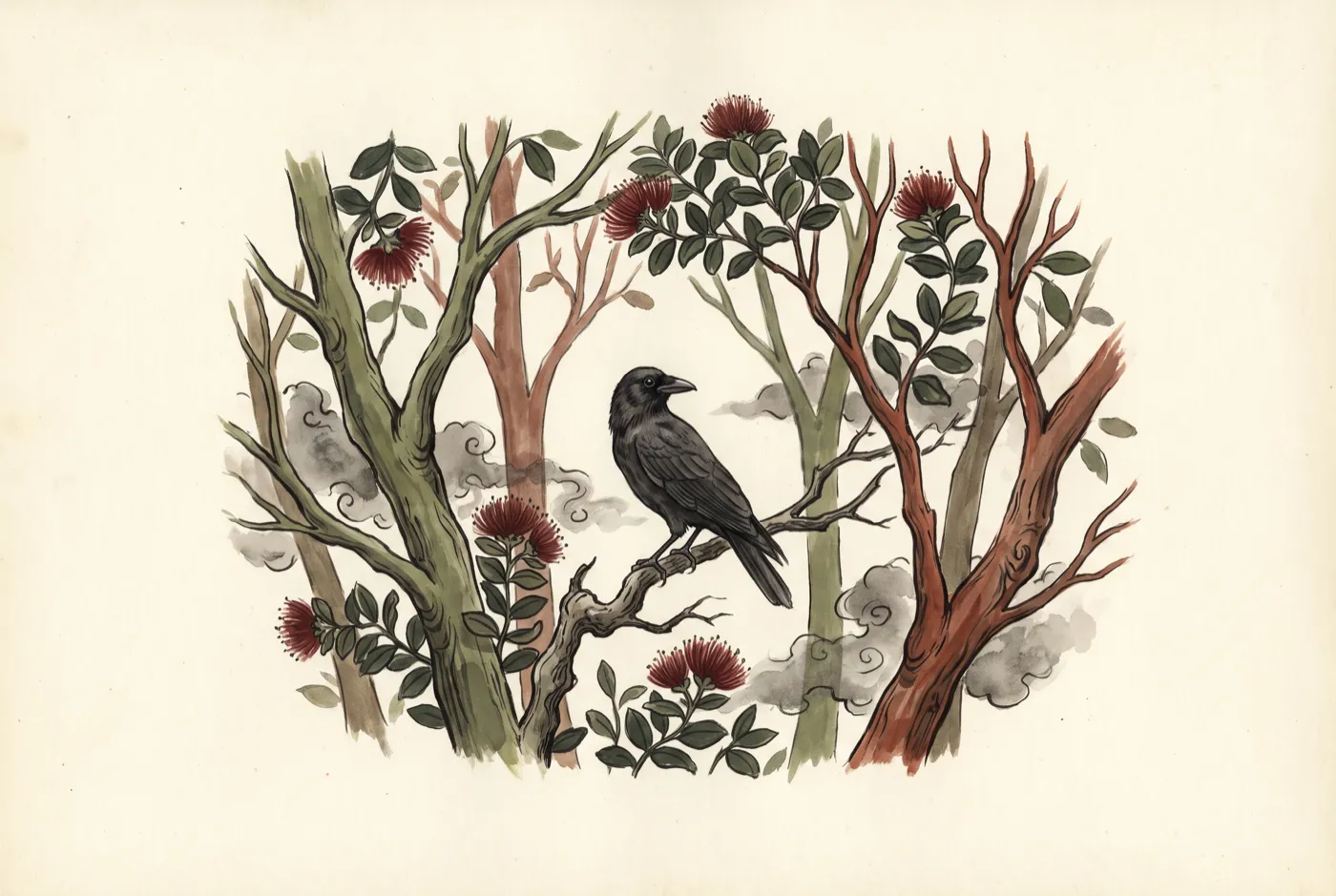
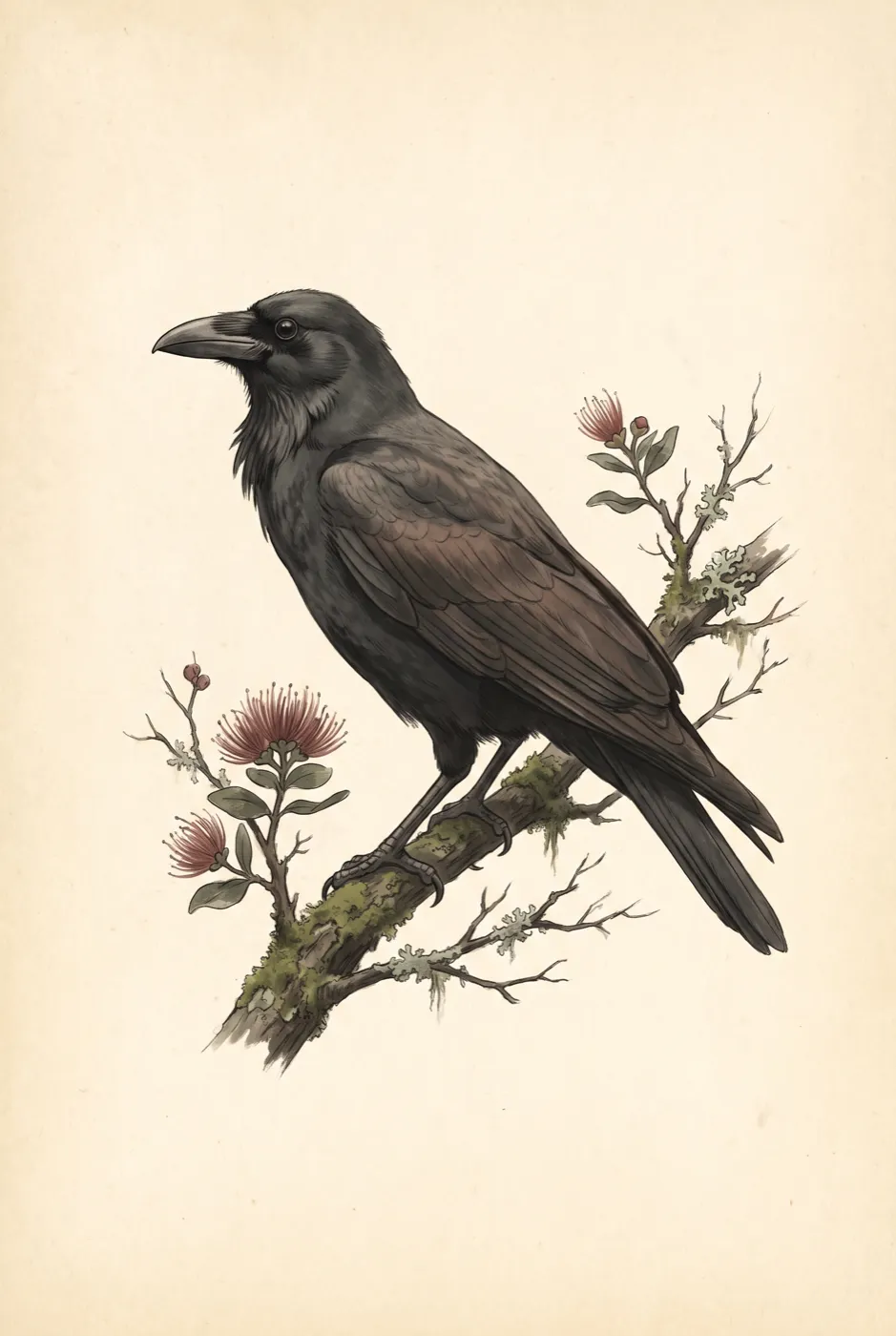
The ʻalalā, the Hawaiian crow, shows what that looks like. The last wild birds were gone in 2002, a loss taken up in the note on what extinction takes with it. In November 2024 five young birds were released into forest in East Maui, and in November 2025 the Hawaiʻi Department of Land and Natural Resources reported two more, a male and a female, moved into the same field aviary. The first five had by then spent a full year in the forest. They still use feeder stations fitted with scales and motion-triggered cameras so the team can check each bird's condition, and the department says the feeders stay "until the ʻalalā become fully self-sufficient foragers." The project's own page puts the captive flock at more than 110 birds, and still describes the species as extinct in the wild, with an exception for the birds recently released. A flock that flies free and is still weighed at dinner is what the clause is about.
The way out is written down
The same guidelines set the terms for leaving. A species normally moves to a lower category once it has qualified for that category for five years. For a species leaving Extinct in the Wild through a reintroduced population, "this period must be five years or until viable offspring are produced, whichever is the longer." Released animals do not count as mature individuals until they have bred. The door is a breeding test with a clock on it.
It has been passed. In December 2019 the IUCN called the Guam rail "the second bird in history to recover after being declared Extinct in the Wild," after the California condor, a bird whose free-flying population now has a different problem. The last wild Guam rail was killed by the introduced brown tree snake in 1987. After a 35-year breeding programme the rail was established on Cocos Island, next to Guam, and listed as Critically Endangered, one step from the category it left.
The scimitar-horned oryx was declared Extinct in the Wild in 2000. In 2013 the Environment Agency – Abu Dhabi formed a partnership with the government of Chad and the nonprofit Sahara Conservation to return it to the Ouadi Rimé-Ouadi Achim reserve. The first animals were released there in 2016, and nearly 300 in the years since, according to the Smithsonian's National Zoo and Conservation Biology Institute, which works on the monitoring after release. In December 2023 the IUCN moved the species to Endangered. Among the Smithsonian's photographs from the reserve is a mother with her wild-born calf.
A population in the wrong place
The last clause of the definition, "well outside the past range," means a species can live free, and even breed, and still be Extinct in the Wild. The sihek, the Guam kingfisher, was gone from Guam's forests by 1988, taken by the same snake. On 28 August 2024 nine birds were moved from Wichita, Kansas, to a Nature Conservancy preserve on Palmyra Atoll, and six were released on 23 September. The U.S. Fish and Wildlife Service calls it a "conservation introduction" outside the historic range, "not meant to be a permanent population." The goal is Guam, once the snakes can be managed.
The Red List counts an introduced population like that only if, among other conditions, it has produced viable offspring and "at least five years have passed since the introduction." Whatever else happens on Palmyra, that clock cannot run out before September 2029.
What the category is for
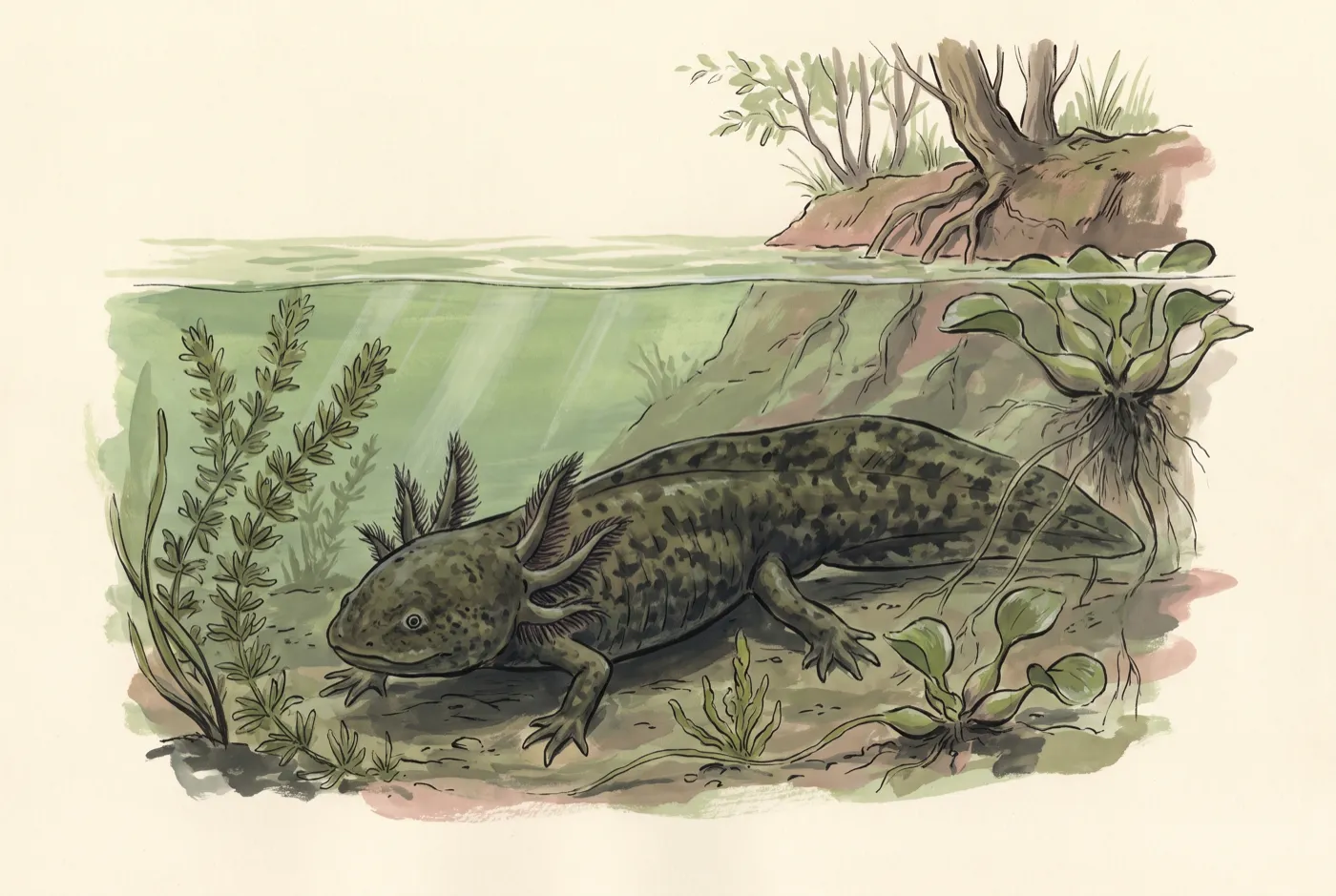
Extinct in the Wild is where a species is recorded when its survival depends on people keeping it, which makes every entry in it a programme with names attached: the breeders and field teams in Hawaiʻi, the zoos holding the sihek, the reserve staff in Chad. The other half of the definition, the surveys that have to fail before a species goes in, is worked through in the note on the axolotl, which does not qualify. The rules for coming out are shorter and harder: breed, wait five years, and stand without being managed animal by animal. The record for the ʻalalā links the project's own reports.
Sources
Read the same pages this note was written from. A citation is not a partnership or an endorsement.
- portals.iucn.org · https://portals.iucn.org/library/sites/library/files/documents/RL-2001-001-2nd.pdf
- nc.iucnredlist.org · https://nc.iucnredlist.org/redlist/content/attachment_files/RedListGuidelines.pdf
- iucn.org · https://iucn.org/news/species/201912/species-recoveries-bring-hope-amidst-biodiversity-crisis-iucn-red-list
- nationalzoo.si.edu · https://nationalzoo.si.edu/conservation/news/once-extinct-wild-scimitar-horned-oryx-are-back-brink
- fws.gov · https://www.fws.gov/project/sihek-conservation-introduction-palmyra-atoll
- dlnr.hawaii.gov · https://dlnr.hawaii.gov/blog/2025/11/26/nr25-137/
- dlnr.hawaii.gov · https://dlnr.hawaii.gov/alalaproject/
- abcbirds.org · https://abcbirds.org/birds/alala-hawaiian-crow/
Free to read
Reading is where it starts.
Witness keeps one species a week: a drawn plate, its true story with sources, and one honest action. The archive is open to read, and these notes are the reading around it.
More in Numbers
View all →