When a species goes extinct, the work it was doing in its ecosystem stops, and whether anyone can measure what follows depends almost entirely on whether anyone was measuring before. On Guam, where an introduced snake emptied the forest of birds, researchers estimated a 61 to 92 per cent decline in seedling recruitment for the trees those birds had carried seed for. When the baiji vanished from the Yangtze, no equivalent baseline existed to measure against. The difference between the two cases is the monitoring, not the size of the loss.
The forest that stopped moving its seeds
Guam lost its forest birds after the brown treesnake arrived, and the island is now, in the language of the research, bird-free. Roughly 70 per cent of Guam's tree species carry fleshy fruit adapted to be eaten and dispersed by birds.
Between 2008 and 2012, a team of researchers compared two of those trees, Psychotria mariana and Premna serratifolia, on Guam against Saipan, Tinian and Rota, three nearby islands where bird communities are still intact. They measured what passage through a bird's gut does to germination, modelled how far seed travels, and followed seedlings through survival. Combining those stages, they put the decline in seedling recruitment on Guam conservatively at 61 to 92 per cent. The work was published in Nature Communications in 2017.
The thing worth holding onto is what that number does not say. Guam's forest is standing. The adult trees are alive. What the study measured is the next generation, and the distance it fails to travel — a consequence that plays out over the lifetime of a tree, which is why it took four islands and four years of fieldwork to see at all.
The river that lost a dolphin and kept the nets
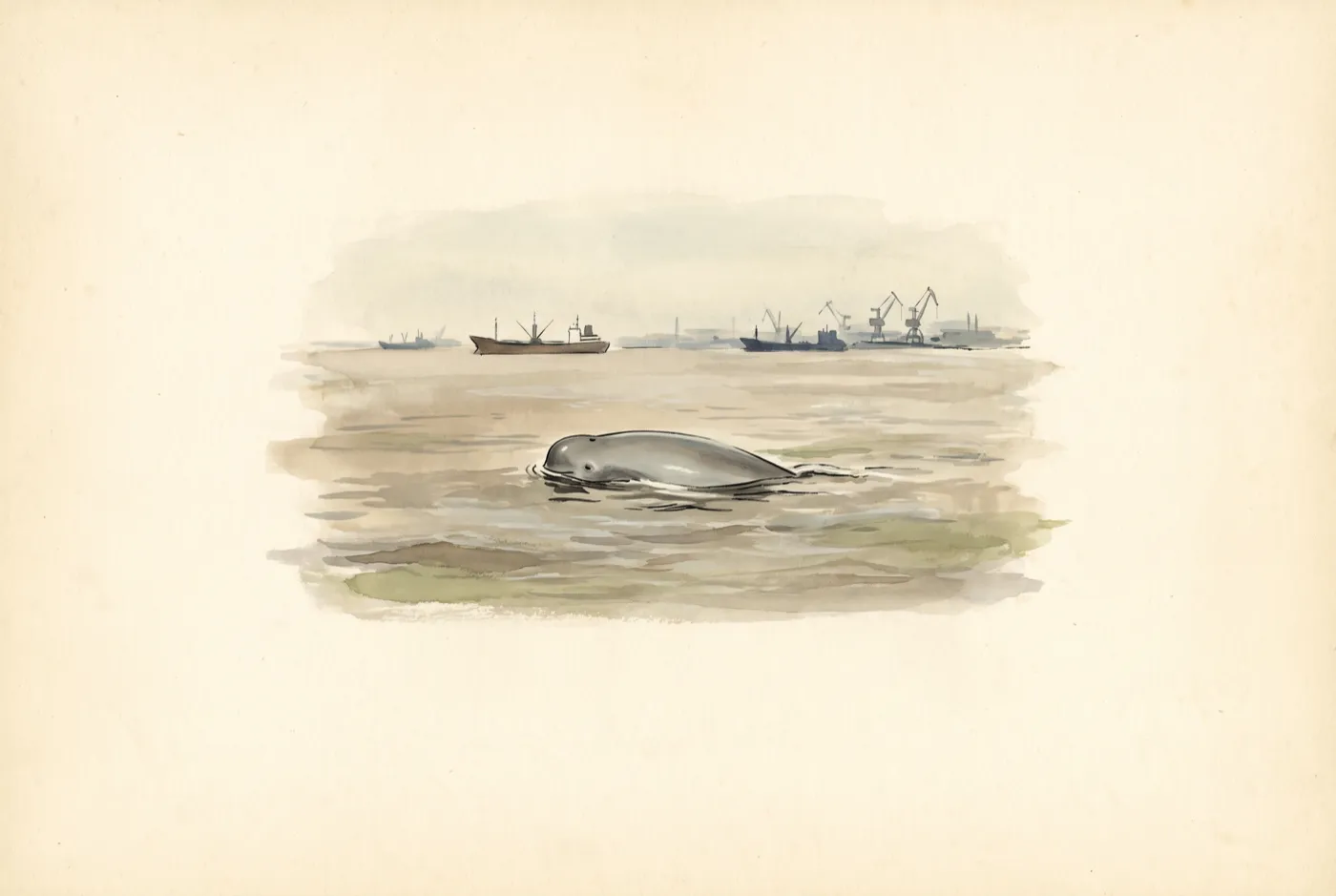
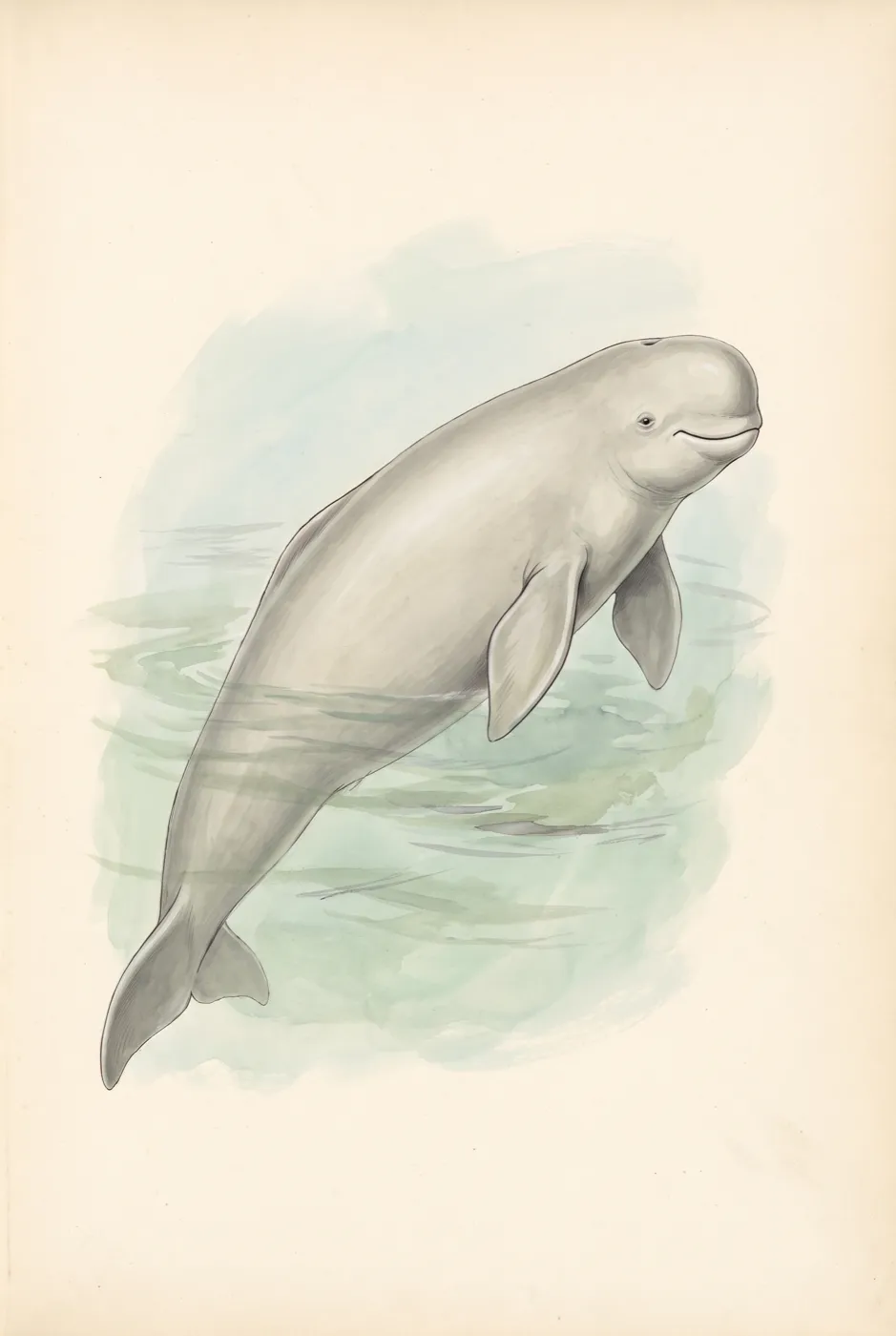
In 2006, a six-week survey by multiple vessels, working visually and acoustically, covered the baiji's entire historical range in the main channel of the Yangtze and found no evidence the species survived. The dolphin had numbered around 400 in 1980; 13 were counted between 1997 and 1999. The last verified reports were a pregnant female stranded at Zhenjiang in November 2001 and an animal photographed in the Tongling section in May 2002. Interview surveys in 27 fishing communities in 2008 found little evidence of survivors. The IUCN SSC Cetacean Specialist Group describes it as the first documented global extinction of a megafaunal vertebrate in more than fifty years. The causes were bycatch, rolling hook longlines in particular, and wider habitat degradation.
What followed in the river was not a documented unravelling. It was the same gear, working on the animal next in line. Successive surveys of the Yangtze finless porpoise, the river's remaining cetacean, ran to about 2,700 in 1984–1991, about 2,000 in 1997–1999, about 1,800 in 2006, 1,045 in 2012, 1,012 in 2017, and about 1,249 in 2022 — the first rise anywhere in that series. The porpoise is the animal that particular river still has, and the one we keep a record for.
The bird whose work is on hold
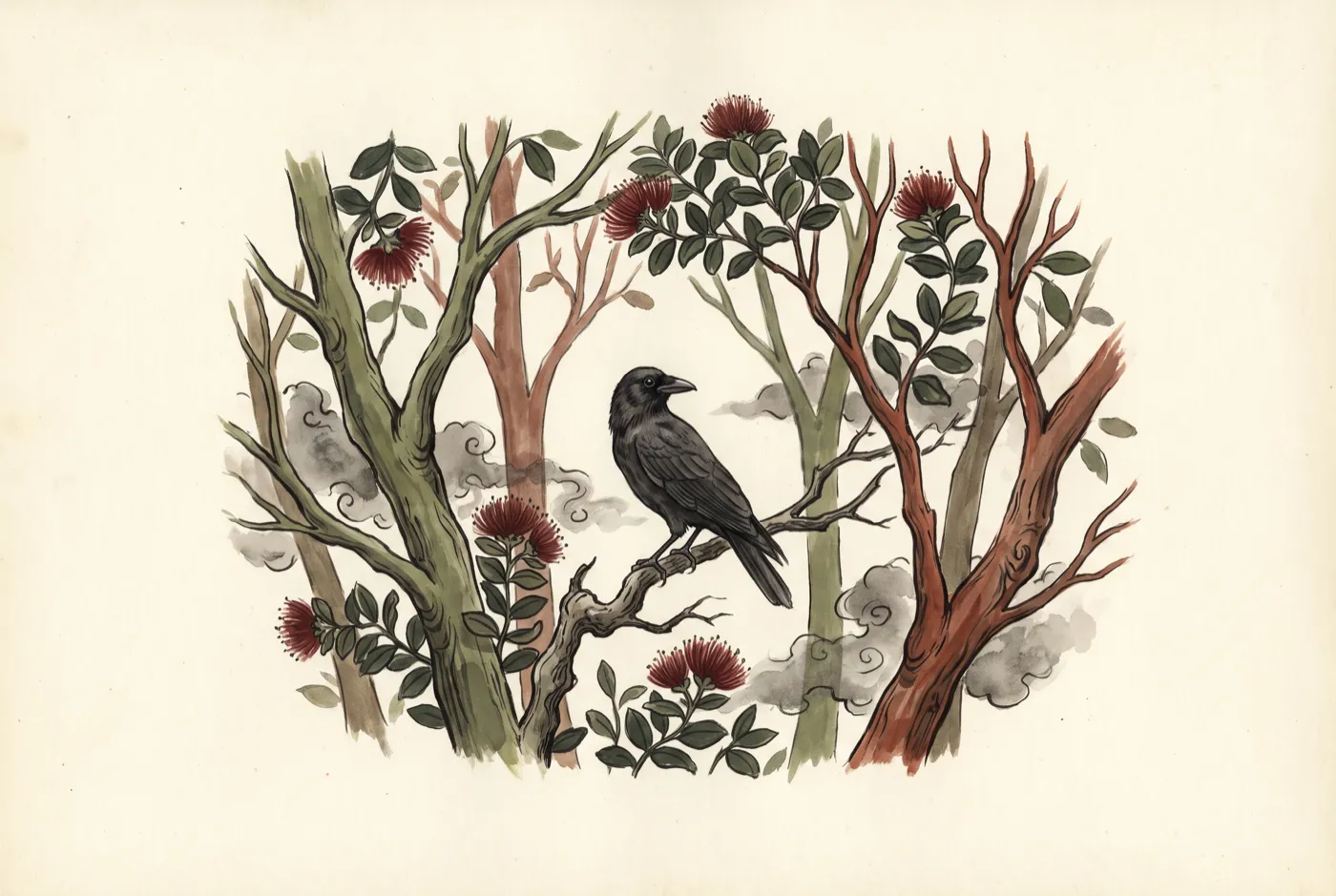
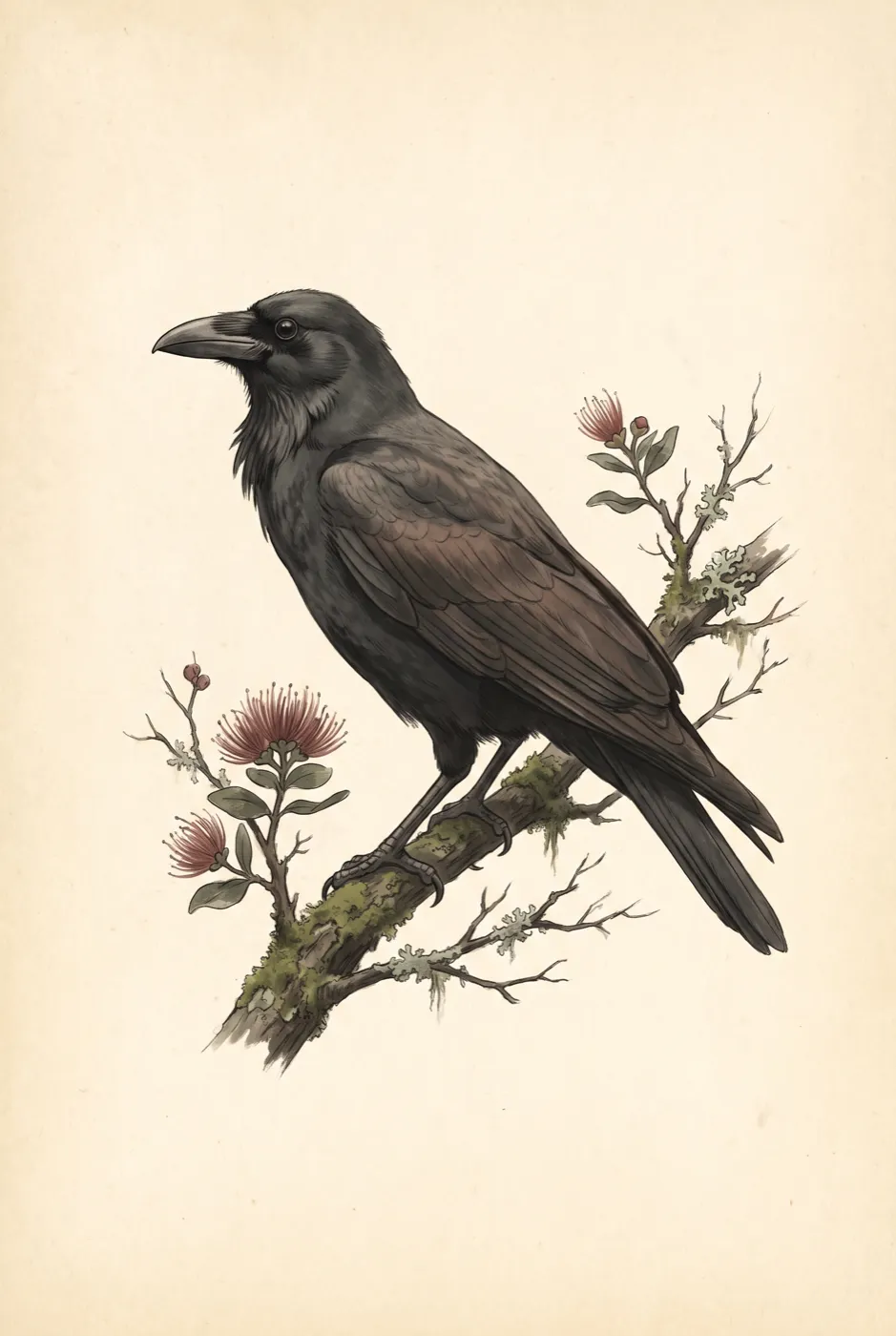
Sometimes the function is not lost so much as suspended. The last two wild ʻalalā, the Hawaiian crow, disappeared from their territory on Hawaiʻi Island in 2002. The species survives only in human care, at the Keauhou and Maui Bird Conservation Centers. The birds ate and dispersed the seeds of native Hawaiian plants, and the forest has been without that for more than twenty years, even though the animal itself has not ended.
Birds were released on Hawaiʻi Island between 2016 and 2019 and some progress was made: a pair nested, though no young grew to maturity. Deaths from ʻio, the Hawaiian hawk, accelerated in the summer of 2020, and the surviving birds were returned to human care. That is the honest shape of the attempt so far, and it sits behind the record for the ʻalalā.
The answer, in two parts
Sometimes the consequence is measurable, and the measurement costs four islands and four years. Sometimes there is no measurement, because the species left a river nobody held a baseline for — and an absence of recorded cascade is a fact about the record, not about the river. Both are true at once, and neither one makes extinction smaller. What ends is the animal and also everything it was doing on all the days nobody was watching.
The people keeping those records are readable directly: the IUCN SSC Cetacean Specialist Group publishes the baiji and finless porpoise accounts, the ʻAlalā Project publishes what each release run actually did, and Rogers and colleagues published the Guam comparison in full.
Sources
Read the same pages this note was written from. A citation is not a partnership or an endorsement.
- pmc.ncbi.nlm.nih.gov · https://pmc.ncbi.nlm.nih.gov/articles/PMC5344968/
- iucn-csg.org · https://iucn-csg.org/species-accounts/baiji/
- pmc.ncbi.nlm.nih.gov · https://pmc.ncbi.nlm.nih.gov/articles/PMC12202776/
- fws.gov · https://www.fws.gov/project/alala-project
- iucn-csg.org · https://iucn-csg.org/species-accounts/yangtze-finless-porpoise/
Free to read
Reading is where it starts.
Witness keeps one species a week: a drawn plate, its true story with sources, and one honest action. The archive is open to read, and these notes are the reading around it.
More in Numbers
View all →